
Dealing with setbacks

By Will (Student Blogger: BSc Hons Entrepreneurship and Management)
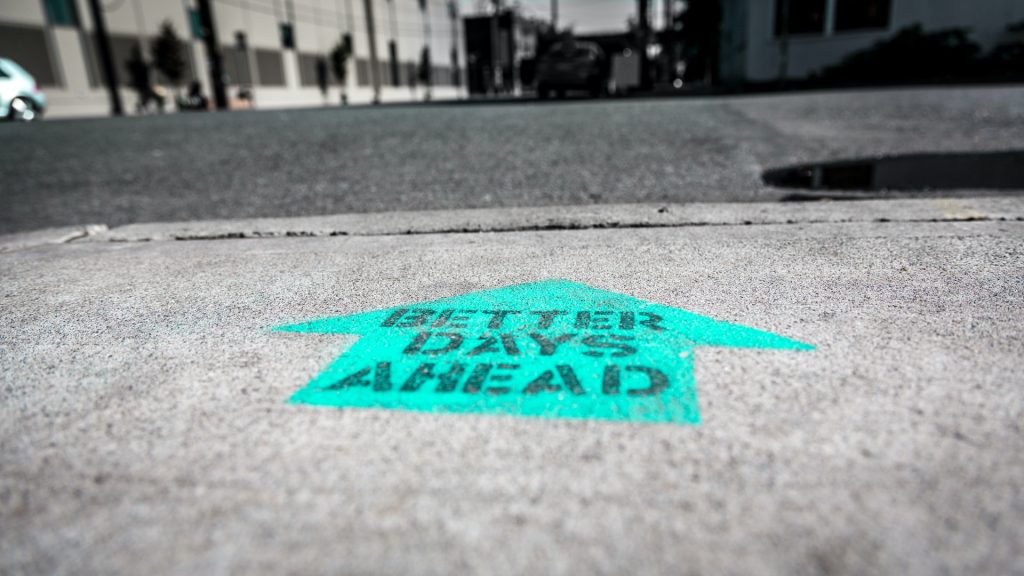
I sit here writing this blog on receipt of one of my more favourable grades from a module I simply adore. The story just a week ago however was very different, with one of my most trusted suppliers to one of the enterprises I set up during my university studies expressing their desire to terminate our contract. Setbacks come in all shapes and sizes, however our approach to them should be steadfast in every situation and involve encountering them with pragmaticism and unquenchable optimism.

Sometimes it seems unfair that we receive a certain underwhelming grade on work that we were only co contributor to, or oppositely sole contributor to while following all the advice provided. From the wise words of a fourth year who has seen his fair share of As and Es respectively, I can guarantee you that the perfect streak of 100% on your interactive script does not exist. For that I am glad, as an education with no hiccups or revelations of incorrect practises is no education at all.

Many of us lose sight that University is specifically designed for mistakes to be discovered and imperfect methods practised, without worry of their effect on the ‘real world’. Mess-ups will happen to us all, that I will happily bet my life on. How we individually choose to handle them and utilise the experience sets innovative ground breakers apart from static onlookers.

My first point of advice is to remain humble, this is a necessity that many of us lose sight of due to our advantageous position at a top university. Setbacks happen to all of us. As an entrepreneur they happen almost hourly to myself. My academia and privileges do not and will never stop this happening. The same is true for all of us, no matter how big, how successful or how established. An appreciation that setbacks could be around the corner and your openness in accepting that is key. It allows you a stable head to deal with the eventual hiccup, whatever it happens to be.

Having recognised the inevitability of setbacks and accepted that they will regularly occur to each of us, the question remains of what to do next. My second piece of advice is to use setbacks as a learning opportunity. There is no benefit in repeating the same mistakes, so ensure that any new setback is the only time it happens. As we all appreciate, learning is best done on our own terms, with some of us preferring to relive the actions as interactively as possible, with others mind mapping from ideation to execution. Whatever way works best for you is the way I would promote, but remember this, life is not fair and never will be. What I mean by this is that there is no benefit in blaming the situation for your setbacks, passing the learning from this event off as unnecessary due to ‘external’ factors. You will never find a completely harmonious situation in which all the stars align, it is foolish therefore to believe that your performance is never in need of improvement.

It is important to appraise your performance realistically, appreciating that 100% effort was not perhaps afforded to a certain piece work, or recognising that you maybe did not have enough references. It may be frustrating to initially admit, but true reflection on one’s actions is an essential step in mitigating their reoccurrence. The only person who benefits from setback remediation is the person who is undertaking it, you will only get out what you put in. Sitting and complaining of life’s infinite unfairness will not benefit anyone, the proactiveness to act on your weaknesses will allow for setbacks to become strengths.


My exam preparation tips

By Tsz Yan (Student Blogger: MSc Business Analytics)

Examinations are a difficult issue for us as there are a lot of things to understand and remember before the exam period. So, I am here to suggest a whole set of steps that can be taken during the academic year in order to make the final revision period easier.

  1. Prepare study materials before the lesson

Our lecturers usually upload the teaching material before the lesson. You should read these materials and have a brief understanding of their content. Therefore, you can catch up with what the lecturer says during the lesson.

  1. Take notes and ask questions during the lesson

It is important for all of you to take notes during the lesson. Not only can this help you to pay more attention to the lesson, but also help you to have a better understanding of the teaching material. If you have any questions about your understanding of materials, don’t hesitate. Just ask the lecturer politely and they will be happy to answer your question.

  1. Study after the lesson

The first two steps are just basic steps you should follow. If you want to have better preparation for the exam (i.e. achieve a better result in the exam), you should concentrate on this step.

After the lesson, you should tidy up all the notes you made. If you find that there are some important things missing, just listen to the recording again to catch up on what you missed. If you have any questions on the topic after reading all the notes you made, ask your classmates and ask the lecturer if needed.

Also, in order to have a better and deeper understanding of the specific topic, it is important for you to do further reading using the textbooks and/or articles that the lecturer recommended. These further readings may also answer some of your questions on the topic.

Finally, you should make a complete set of notes for each topic (combining the notes you took during and after the lesson, the additional information and/ or knowledge from textbooks, articles, as well as some explanation you obtained from your friends and/or the lecturer).

If there are any after-class exercises or case studies, you should also complete them at least once to make sure you have fully understood the topic.

  1. Study in the revision period

After you have completed the above steps, life will become easier in the revision period. During this period, all you need to do is just go through the notes you made and the after-class exercises or case studies you have done. Keep asking yourself questions related to the topic during revision. The more questions you can answer, the more confidence you will have for the exam.

The above four steps are my process of preparing for the exam. I hope these steps will help you to achieve a good result. Good Luck!

Taking the First Step Outside

By Azizan Anas (Student Blogger: BSc Hons Mathematics, Operational Research, Statistics and Economics)

As the majority of the academic year is online-based due to the ongoing pandemic, and most of us are confined to a small, limited hybrid space of our personal rest area and workstation (we also call it our bedroom), we often overlook the outdoors. Watching pre-recorded lectures, attending workshops and tutorials and communicating with groupmates through an online platform can all be done from our room now. This can be both advantageous and harmful: a double-edged sword of a learning format.

Ask yourself, when was the last time you went out to simply enjoy the outdoors or do physical activities, that was not because of groceries/commuting?

In full honesty, between March and December I barely did any exercise or went outdoors; most of my time was spent in my uni bedroom, watching lecture videos, attending seminars, doing coursework and attempting practice questions, as well as going to the communal kitchen to socialise with my flatmates. If I got too bored studying in my room, I would alternate the library or the shared kitchen for a change of scenery. Going outdoors or doing exercise, however, wasn’t a part of my routine.

One day, I saw an Instagram Story by the Malaysian Society about the 27 27 challenge, organised by the charity Mind. The challenge was to run 27 miles in 27 days during March 2021 while fundraising in solidarity with the 27% of students who report mental health issues while in university. It was a perfect opportunity for me to move on from my sedentary lifestyle. I was trapped in my room most of the time for the past 2 months simply because I didn’t find any incentive to go outside. It was too cold at that time since it was still the Winter season.

My coping mechanism to relieve stress has changed. From resorting to binge-watching Netflix while eating snacks as a form of unwinding from work – to now going for a short jog around campus. I feel much more satisfied and happier being able to take care of my physical wellbeing as well as my mental wellbeing while at the same time running for a good cause. There are plentiful benefits associated with going outdoors and doing physical activities such as improving your sleep pattern, improving your physical and mental wellbeing, reducing stress and so on.

The first step is always the hardest, but the following steps are easy to follow if you pass through the first obstacle. Exercise can lead to feelings of satisfaction, a sense of achievement, and being more cheerful. All that can be part of your day, you just need to take a step away from your room. All it takes is the willingness, and strength to go outdoors. What is important is to develop a sustainable habit that can help you to achieve this.

Go out and take a walk 15 minutes each day for a week; force yourself if you have to. The key to a successful sustaining habit is not to expect an immediate outcome but rather to see an improvement of at least 1% each time. It is no use to all of a sudden go for an extreme distance/time that you find too challenging, putting yourself off from doing it again. It is important to start slowly to make your desired habit of walking feasible, easy and satisfying. Depending on your progress at the end of the week, consider heightening the base mark to a higher level (at a moderate increase). In the end, you’ll be able to take going outdoors as a natural stress reliever full of benefits you will look forward to. You can reward yourself as well to keep you on track (an example is to get yourself a doughnut from Greggs if you walked at least 5 days a week!)

May is the National Walking Month in the UK. Take this as an opportunity to start and grow the habit of living an active way of life. To encourage people to cultivate this healthy lifestyle, Living Streets (the UK charity for walking) has a pledge on their website where they will share with you how many miles you will walk, how many calories you’ll burn and how much CO2 you will save depending on how many short walk you pledged for the week (A short walk is defined as a mile or 15-20 minutes of walking). I believe that by cultivating this habit of going outdoors and doing physical activities, we will be more prepared to take our summer exams much better, and more mentally prepared to engage.