The Centre for Science Studies here at Lancaster University is hosting a series of events this year to mark its 40th anniversary. The organising theme for these events is temporalities, and how they figure in particular STS research themes and approaches.
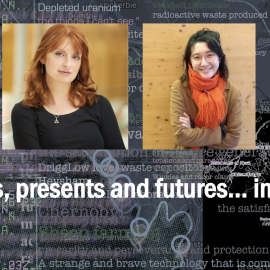
A key theme of the centre’s activities has been research on climate, energy and the environment. In this webinar we are delighted to bring together contributions on this theme from two speakers: Dr Stefan Schäfer, from the Research Institute for Sustainability at GFZ in Germany and Professor Gordon Walker, based in the Lancaster Environment Centre. Gordon is a Lancaster Professor Emeritus and an active member of the CSS board. We are also very pleased to welcome back Dr Mette Kragh-Furbo as a discussant. Mette was heavily involved in the work of the CSS during her time at Lancaster and is now Lecturer in the Sociology of Public Health at Liverpool University.
Event details
- Date: July 7th
- Time: 12.30-14.00 BST
- Location: Teams
- Registration: via Eventbrite. Registration is possible at any time, including once the event has started.
Presentation details
Carbon Time
Dr Stefan Schäfer
Work in STS and across the humanities has shown how climate change unsettles established relations between the human and the planetary, including between human historical time and planetary time. Yet planetary time is not given in advance but made available to thought and action through scientific concepts, technical practices, infrastructures, and institutions. This talk asks what happens when planetary time becomes practical. I argue that one consequential expression of planetary long-termism can be found in the institutional forms, subsurface expertise, and material capabilities of oil companies. I analyse this convergence of the planetary with the world’s foremost planet-altering industry—the oil industry—through the contemporary push for carbon storage. Grounded in knowledge accumulated through more than a century of surveying, prospecting, drilling, modelling, and extracting, carbon storage makes planetary time practical as “carbon time”: the time of molecular migration, caprock integrity, fault behaviour, pressure plumes, monitoring regimes, storage liability, and corporate continuity. In this way, carbon time recasts the subsurface expertise, infrastructures, and corporate durations of the oil industry as necessary prerequisites for climate response. If “Exxon knew,” we might therefore not only scandalize the suppression of that knowledge, but ask why it seems so unsurprising that an oil company could know climate change in the first place, and what the practical entailments of that knowledge are today.
Temporalities, transitions and the polyrhythmia of techno-energy systems
Professor Gordon Walker
Climate change has dimensions of time and space at its core – current, future oriented and historical, and both global and deeply differentiated across place and scale. Its production is also fundamentally rooted in the structure of economies and societies, including in how the socio-temporal foundations of everyday life have come to be, and energy infrastructures enable and sustain the intense, complex and differentiated rhythms of high carbon modernity. In this talk, I bring the concepts and vocabulary of rhythmanalysis into engagement with STS sensibilities, to examine how energy systems can be conceived in polyrhythmic terms, as complex assemblages full of rhythmic animation, interaction, entanglement and temporal coordination. Low carbon futures, I argue, necessarily involve an engagement with time and timing, and with reconfiguring relations between the beats and pulses of energy flowing through environments, infrastructures and technological devices in interaction with the rhythms and routines of everyday life. Energy transitions necessarily involve not just a process of change over time, but also transitions in the temporalities embedded in the functioning of energy systems themselves.
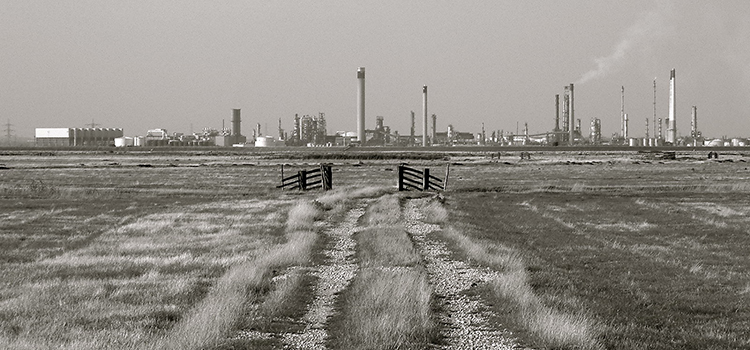
Cover image by Oli, used under a CC BY-NC-ND 2.0 license.