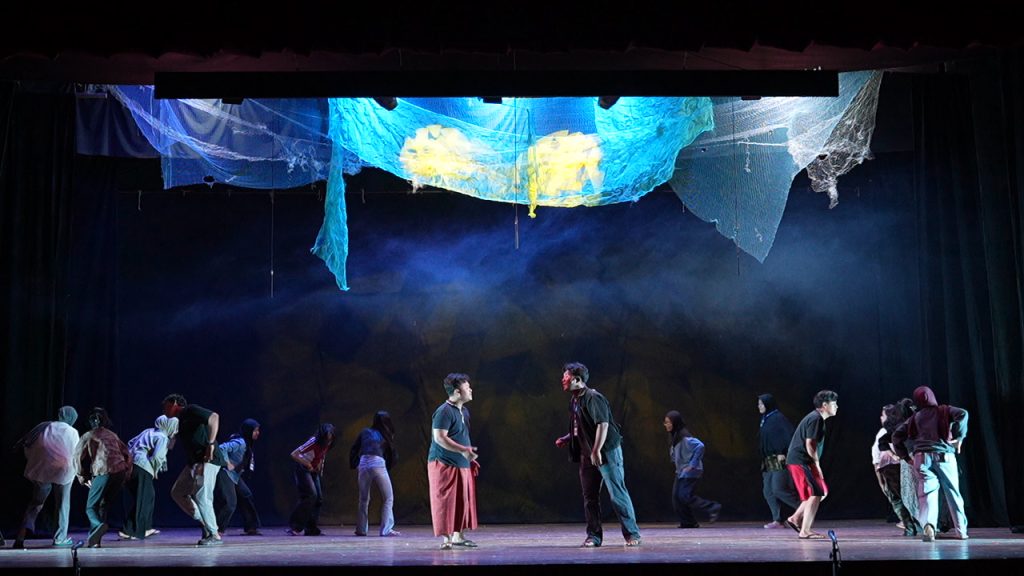
On the 23rd of July 2026, twenty young people from Cilincing coastal communities visualised their communities’ lived experience and their aspirations for an inclusive and sustainable blue economy processes through ‘Laut Kita, Masa Depan Kita (Our Ocean, Our Future)’ participatory theatre performance in Jakarta, Indonesia. The UK Research and Innovation (UKRI) Arts and Humanities Research Council (AHRC) Impact Acceleration Account (IAA) funded “Laut Kita, Masa Depan Kita” is part of a sustained collaboration between Lancaster University, Pusat Riset Hukum Badan Riset dan Inovasi Nasional (BRIN) and Yayasan Segara Nusa Nawasena under the Leverhulme funded ‘Ocean justice and the blue economy’ research project.Some of the young people who took part in the theatre performances come from small-scale fisher and fishworker families who have never received any theatre training. The training for young people in performing, directing, and playwriting was delivered by a local art collective, Insani Teater Cilincing in close collaboration with researchers from Lancaster University, BRIN, and Yayasan Segara Nusa Nawasena.
The series of two ‘Laut Kita, Masa Depan Kita’ musical theatre performances brought together over 100 people from local (e.g. Cilincing urban village office (Kelurahan)) and national government bodies (e.g. the Ministry of Marine Affairs and Fisheries), civil society organisations (e.g. Kalibaru Timur Small-Scale Fishers’ Cooperative), media (e.g. TVRI), and academics and students. Drawing from the research findings and innovative practices from ‘Ocean justice and the blue economy’ project the play creatively depicted the economic, social, and health challenges faced by Cilincing small-scale fishers, fishworkers and their communities; injustices that they felt particularly due to pollution and climate change; and community led initiatives to shape a sustainable future (e.g. recycling of green mussel shells through Komunitas Cangkring).
Head of Research Center for Law, Badan Riset dan Inovasi Nasional (BRIN), Dr Nawawi Asmat, noted that the theatre performance is ‘a unique way in the dissemination of research findings’ as it served as useful tool in ‘translating scientific findings into the language that could be more easily understood’ by the general public.
Special Advisor to the Minister of Maritime Affairs and Fisheries, Dr Hendra Yusran Siry, further explained that ‘artistic method such as theatre could generate empathy’ and ‘open the avenue for dialogue’ between communities who are dependent on the ocean including small-scale fishers, fishworkers, young people, and women with public and private stakeholders.
Creating a participation space for youth
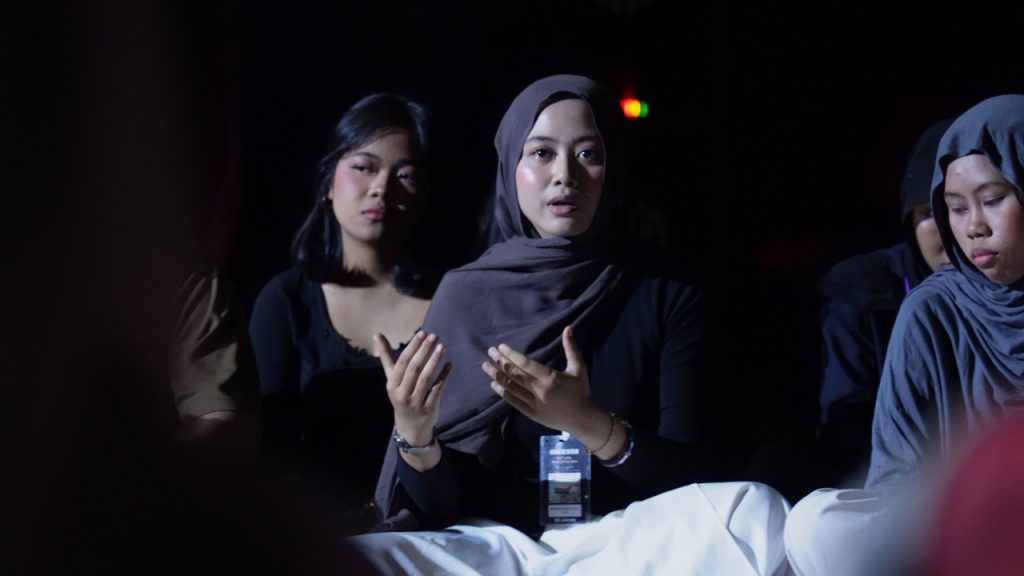
Youth between the age of 15 and 35 accounts for one-third of the world’s population’ (European Youth Forum, 2024; UNFCCC, 2025). Yet, according to the Executive Director of Yayasan Segara Nusa Nawasena, Nathania Giovanni, ‘when it comes to ocean governance, it is not immediately clear to young people how to voice their concerns or what it means for them to meaningfully participate in blue economy processes. This is highly problematic as ocean degradation and climate change coupled with biodiversity loss disproportionately impacted youth right to life, food, and development’.
During discussion with community leaders and audience that follow the theatre performance, Dr Laely Nurhidayah, BRIN, further noted the pressing need for enhancing youth participation in shaping sustainable blue economy is timely and important ‘due to poverty, lack of training job and education opportunities, and fierce competition over space – for instance due to competing ocean economy sectors and the growing illegal settlement on the coastline’.
Dr Senia Febrica, Research Associate at Lancaster University emphasised that the purpose of the co-development of the ‘Our Ocean, Our Future’ is to create ‘a participation space for youth from SSF community in Cilincing that are often sidelined in the blue economy processes and empower youth to enhance their ability to engage with varied and relevant ocean stakeholders’. Creative methods through visual expressions and participatory theatre embedded in ‘Ocean justice and the blue economy’ research project therefore play an important role in providing coastal communities with a tool to document their own experience and ensuring that traditionally overlooked stakeholders including youth are at the centre of ocean research and dissemination processes.
A documentary film based on the theatre co-development and performance is currently being produced and it will be made available in our project website.