Category Archives: News and Blogs

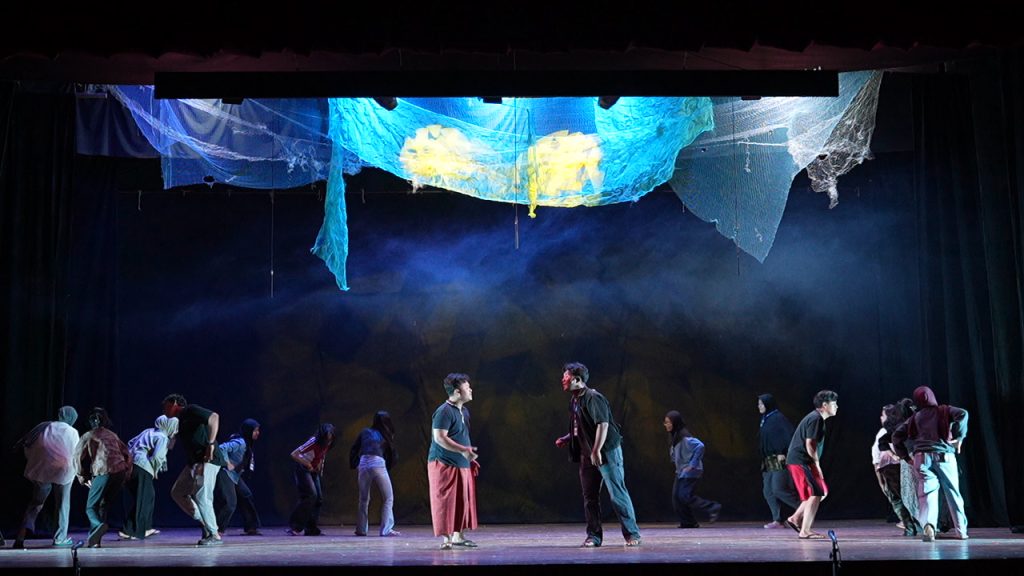
“Laut Kita, Masa Depan Kita” (Our Ocean, Our Future) Theatre Play

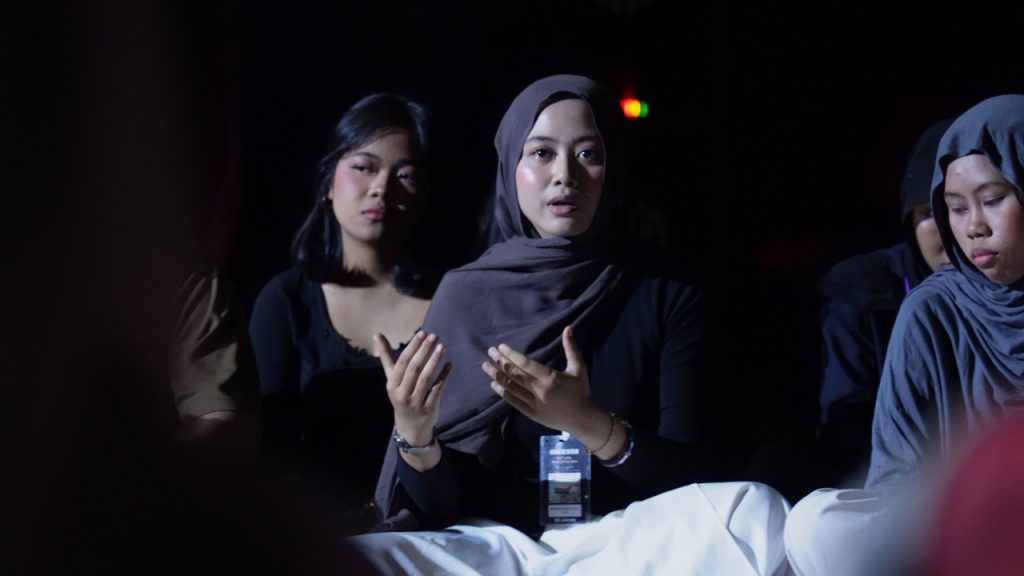
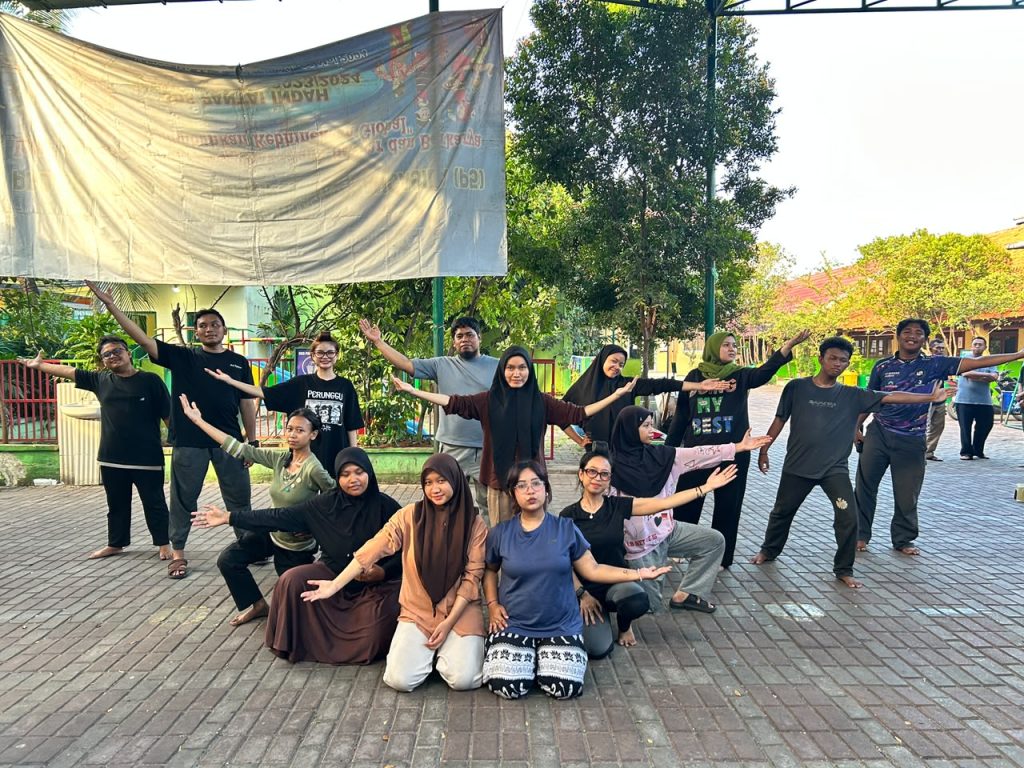
A theatre performance can visualise coastal communities lived experiences, injustices that they face daily (e.g. lack of access to a clean and healthy environment), and their aspirations for positive change. We are working with 20 young people from Cilincing small-scale fishing community and our partners in Indonesia including the Indonesian Government Research and Innovation Agency (Badan Riset dan Inovasi Nasional); a local NGO, Yayasan Segara Nusa Nawasena; an art collective, Insani Teater Cilincing; a small-scale fisher cooperative, Koperasi Nelayan Kalibaru Timur, Cilincing; and a community led recycling initiative, Kelompok Kerajinan Tangan Cangkring Utara to co-develop a theatre play titled “Laut Kita, Masa Depan Kita” (Our Ocean, Our Future).

Drawing from the Leverhulme funded “Ocean justice and the blue economy” research project findings and our expertise in creative methods the performance will visualise challenges that the small-scale fishing (SSF) community in Cilincing face and their aspirations to address the issue of justice and sustainability in the blue economy. The theatre performance is intended to (1) create a participation space for youth that are often sidelined in the blue economy processes; (2) harness creativity and empower youth to enhance their ocean literacy and ability to engage with decision makers; and (3) support the growth of creative economy in the area where education and job opportunities for youth are scarce. It will weave in art, traditional culture with key findings from the ‘Ocean justice and the blue economy’ project that emphasise the pressing need to integrate local knowledge, cultural heritage, and communities’ lived experiences to achieve just blue economy. Empirically, the theatre performance is important due to the unprecedented challenges faced by youth from the SSF community in Cilincing due to recurrent tidal floods and limited access to education and job. Scholarly, arts‐based research approaches continue to remain on the periphery of ocean research (McKinley et al., 2024). We explore the use of theatre to create an original performance piece that can spark dialogue and build solidarity for SSF community among policy makers, practitioners and researchers (McGarry, 2024; Febrica and Morgera, 2022). It will also provide a platform to translate and communicate research which traditional methods cannot convey.  

The co-development of “Laut Kita, Masa Depan Kita” (Our Ocean, Our Future) play is funded by UK Research and Innovation (UKRI) Arts and Humanities Research Council (AHRC) Impact Acceleration Account (IAA) grant.  Details of the theatre performance are listed below.

When: 23 July 2026 at 13:00-15:00 (Jakarta time) and 19:15-21:15 (Jakarta time)

Venue: Gedung Kesenian Miss Tjitjih, Jl. Cempaka Baru Timur, RT.9/RW.2, Cemp. Baru, Kec. Kemayoran, Kota Jakarta Pusat, Daerah Khusus Ibukota Jakarta 10640, Indonesia

Sharing insights from ‘Ocean justice and the blue economy’ research at the 2026 British International Studies Association (BISA) Conference

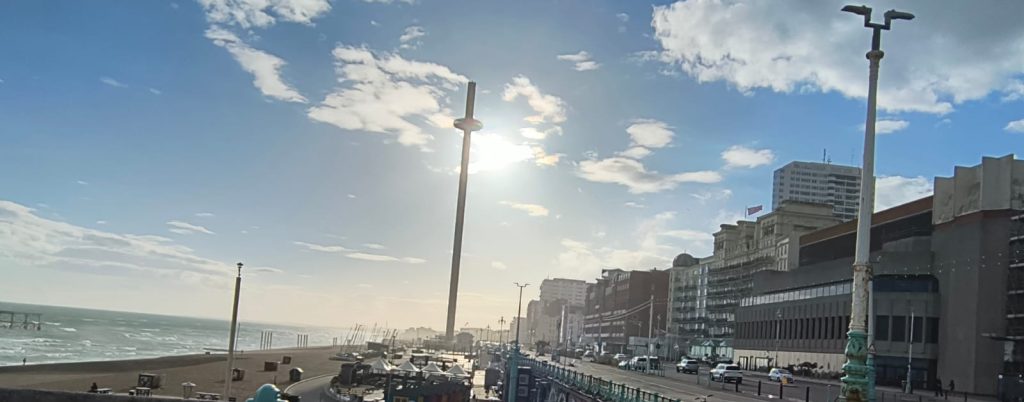
Creative approaches by visual arts (e.g. photos, sketches) can bring ocean-dependent communities’ voices into research and decision-making processes. This is one of the key insights shared by Dr Celine Germond-Duret and Dr Senia Febrica at the 2026 British International Studies Association (BISA) that took place from 3-5 June 2026 in Brighton, UK.

During this year BISA Conference Dr Germond-Duret chaired the Roundtable “Blue Justice: What research agenda for a sustainable and inclusive ocean” on the 4th of June 2026 that brought together Dr Senia Febrica (Lancaster University), Professor Peter Newell (University of Sussex), Dr Antje Scharenberg (University of Southampton), and Dr Charlotte Weatherhill (University of Manchester, co-convenor of BISA’s Environment and Climate Politics Working Group).  The roundtable also included a short video  from the Global South scholars including Dr Sulley Ibrahim (Institute of Local Government Studies, Ghana), Dr Harrison Golo (University of Education, Winneba, Ghana), Dr Buhle Francis (Nelson Mandela University), Dr Laely Nurhidayah (Badan Riset dan Inovasi Nasional, Indonesia), and Silvia Dian Anggraeni (Universitas Pertamina, Indonesia)  sharing key messages on the topic.

At BISA Conference Dr Germond-Duret and Dr Febrica also delivered a joint presentation titled “Integrating alternative knowledge of ocean justice into Indonesia’s blue economy” as part of the “Hydrosphere and Cryosphere Governance” Panel that was chaired by Dr Charlotte Weatherhill (University of Manchester) on Friday, the 5th of June 2026.

Insights from “Ocean justice and the blue economy” research project shared during the two events highlighted that:

  • mainstreaming the notion of ocean justice in the blue economy is timely and important due to the unprecedented challenges faced by coastal communities due to unfair and unsustainable blue economy activities that caused heavy pollution, decline of fish stocks and community income, and other social-economy problems such as limited access to education, training, job or health services.
  • access to information and participation for coastal communities in blue economy processes remains limited and sporadic. Even for community groups that have access to participation or consultation, they felt that their views were not being listened to, and key ask not acted upon. There are difficulties for coastal communities to access justice and/or gain compensation for loss and damage that they experienced.
  • the use of creative methods can encourage research participants to share their lived experiences and discuss challenges that they face that they would normally would not be able or willing to do.
  • drawing from understanding that there are different actors in Politics and International Relations and potential paths along which norms and practices of justice and equity may travel – from the top down, the bottom up or horizontally, International Relations approaches need to take a more holistic way in viewing interactions between paths, actors and framing at local, national, and global levels (Niner et al., 2022; Parks and Morgera, 2015).

Summary of Science Summit (Alongside UNGA 80) Session

Background

Despite blue economy projects around the world aiming for the sustainable use of marine resources, there are growing criticisms regarding potential injustices towards human and non-human populations (Germond-Duret, Heidkamp and Morrissey, 2022; Dulvy et al; 2021). Using ‘multispecies blue justice’ lenses, this session explored how to better integrate nature, climate and biodiversity in the blue development agenda. Taking the ‘ocean decolonisation’ approach this session expanded the concept of justice to include both ocean dependent communities and non-human populations. It offered academic insights, practical guidance and best to address a major blind spot in ocean justice study that often omits non-human-others (Tschakert, 2022), and conservation practices that often overlook ocean dependent communities. In a context of “blue acceleration” (Jouffray et al, 2020), the need for an approach that provides ethical and legal protection to ocean populations (human and non-human) has never been so pressing.

Key issues discussed

  • Lack of consideration for “justice” in the dominant discourses on development and the blue economy.
  • Local to global dimension of multispecies justice.
  • Contributions of seafood businesses to multispecies justice.
  • Impacts of varied and relevant blue economy activities on marine mammals.
  • Injustices faced by coastal communities in Mexico due to growing tourism, port expansion, and narcotrafficking.
  • Capacity building and advocacy programmes focusing on young people in the context of blue economy and ocean-climate actions.
  • Integration of underwater acoustics research, soundscape analysis, and music to support the conservation of Posidonia oceanic— a threatened seagrass in the Mediterranean.

Key recommendations for action

  • Mainstream the consideration for the social dimension of the blue economy.
  • Deconstruct dominant discourses that influence political agenda and how we view the ocean and the blue economy.
  • Advance multispecies justice that provides us a way to rethink justice differently by integrating the specific needs of coastal communities and protection of marine environment.
  • Ensure that multispecies justice is considered across all levels of ocean governance, starting at the local level with the most marginalised communities.
  • Promote a stewardship commitment by businesses to create possibilities for recognising responsibilities to protect the marine environment and communities who depend on it.
  • Advance the principles of ‘market for responsibility’ that are equipped with stewardship standards of behaviour and information provision, data on the impacts of corporations, formal corporate governance requirements, voluntary landscape for collective stewardship behaviours and impacts, and any ranking/rating of performance regarding stewardship.
  • Take action to mitigate impacts of blue economy activities (e.g. incidental mortality in fishing gear, bycatch) on marine mammals as they are unsustainable for some populations of some species.
  • Respectfully include traditional knowledge and their knowledge holders in the conservation and sustainable use of the ocean resources and spaces.
  • Ensure the protection of coastal communities in Mexico that are facing threats of displacement, land and ocean grabbing, and criminalisation due to rapid blue economy development, narcotrafficking, and climate crisis.
  • Support the next generation of small-scale fishers in Mexico that are on a steep decline because of the impacts of tourism, port expansion, narcotrafficking, climate crisis and biodiversity loss – threatening the economic, social, and cultural longevity of the sector.
  • Empower youth to access marine science and mainstream multispecies justice in ocean governance.
  • Embark on innovative solutions to enable young people to build capacity, advocate for peace and sustainability, support sustainable shipping and coastal community resilience on a global scale.
  • Cultivate creativity, art, and music to address today’s ocean–climate–biodiversity crisis. Music, as a universal language, can cross boundaries and can reach audiences beyond science. It awakens care, inspires responsibility, and turns information into shared meaning.
  • Recognise that sustainability requires both science and emotional re-connection and cultural transformation — where art and music can serve as catalysts in translating scientific knowledge into human experience.

Panel members