Category Archives: News and Blogs

Prioritising ocean dependent communities in Southeast Asia maritime security

By Senia Febrica

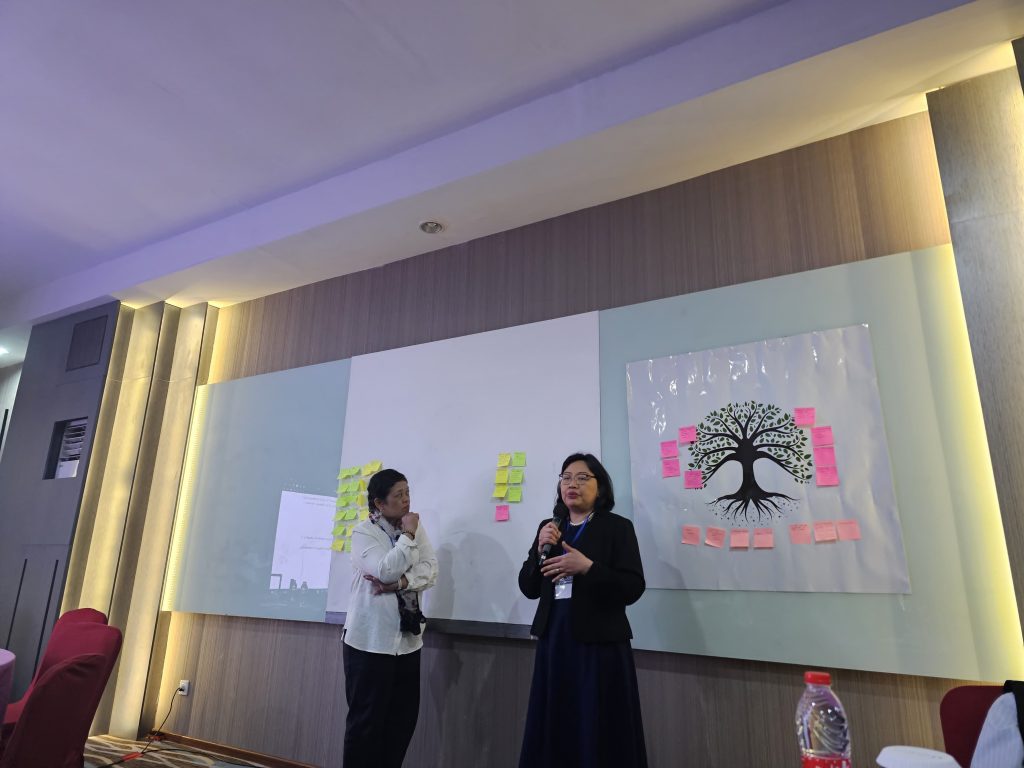
Participatory session at the workshop in Makassar,  9 February 2025. Photo credit: Asmiati Malik

Introduction

On 8-9 February 2025 Dr Senia Febrica contributed to ‘Ocean dependent communities in Southeast Asia’s Maritime Security Governance: Reflections and Actionable Pathways’ workshop in Makassar, Indonesia. The workshop is co-organised by Yokosuka Council for Asia Pacific Studies (Japan) and Segara Nusa Nawasena Foundation (Indonesia) with funding from the Hollings Centre for International Dialogue (United States). The workshop brought together representatives of Indigenous Peoples and local communities, academics, and civil society organisations from Indonesia, Malaysia, and the Philippines.

The workshop aimed to assess in a more rigorous manner the implications of involving marginalised stakeholders in Southeast Asia. Marginalised communities who rely on the ocean, including women, Indigenous Peoples and other minority ethnic/religious groups, youth, and low-income groups are disproportionately impacted by maritime insecurities. These insecurities include those arising from often competing and conflicting ocean economy. Ocean-dependent communities also play critical roles in ocean and coastal development and security. However, their role is often not fully understood, and they are marginalised from decision-making processes. As such, the workshop was embedded in the intersection between maritime security, development, and justice. 

Key messages

During a presentation session titled “Navigating the depth of maritime security” Dr Febrica shared insights from “Ocean Justice and the Blue Economy” research and her own work on maritime security in Indonesia. Key messages from her presentation are outlined below:

  • Maritime security governance is deeply entangled with communities and the social, political, cultural as well as historical context where the communities exist. Due to the intensified sovereignty struggles and geopolitical sensitivity surrounding regions such as the Indo-Pacific, the discussion of maritime security tends to be state centric.
  • The role of communities in maritime security is more often also defined in a very narrow sense, referring primarily to how local civilians can help to meet government security needs. In Indonesia for example, this can be traced to pre-colonial time, the long interaction with Portuguese, and Dutch colonial authorities, the legacy of revolutions following Japanese occupation in 1942-1945 and the Suharto’s New Order security practices (Ahram 2011, 533, 540; Silverstein 1982, 282; Simpson 2013, 10-11; Robinson 2001, 279-291; Ryter 1998, 48-54; Barker 1998, 12 as cited in Febrica 2023a). Portuguese and Dutch colonial authorities throughout the 18th and 19th century, and the Japanese occupation forces during World War II (1942 to 1945), for example, recruited local civilians to meet their security demand.
  • This narrow definition of security and role communities have become embedded and are reinforced in ocean governance processes and associated research that set societal patterns of prioritisation and exclusion (Niner et al., 2024).
  • Whilst current maritime security governance still suffers from a legacy of state-centrism, within other sectors of ocean governance – particularly related to ocean biodiversity its evolution to a more inclusive governance is increasing on global political agenda.
  1. The sustainable development goals (SDGs), arising from the Rio declaration (1992) set out a pathway to do this, despite their limited influence (Biermann et al 2022 as cited in Niner et al., 2024; Germond-Duret et al., 2023).
  2. Other actions include the United Nations Decade of Ocean Science for Sustainable Development that prioritises the co-design and co-delivery of solution-oriented research by diverse actors to promote a spirit of inclusivity and openness (Ocean Decade, 2021, p.6, 7 as cited in Niner et al., 2024). In support of this transformation, the Ocean Decade has also a cultural framework programme that recognises Indigenous knowledge as important to transform ocean sciences and conservation, and encourages support for action (see Febrica, 23 June 2022, Niner et al., 2024).
  3. Furthermore, the recent Agreement under the United Nations Convention on the Law of the Sea on the conservation and sustainable use of marine biological diversity of areas beyond national jurisdiction, the BBNJ Agreement explicitly outlined a mandate to respect, promote and consider the rights of Indigenous Peoples and local communities “when taking action to address the conservation and sustainable use of marine biological diversity of areas beyond national jurisdiction” (Article 5(j) of the BBNJ Agreement as cited in Niner et al., 2024).
  • It is widely acknowledged in the literature that bridging or integrating different stakeholders or knowledge holders and their knowledge systems into governance in general is not easy, let alone in the maritime security sector that is jealously guarded by State authorities. However, what is less well acknowledged and explored are the importance of:
  1. Coastal communities’ participation in decision-making processes is needed to increase buy-in from communities and therefore, ensure the success of security initiatives.
  2. Coastal communities often have a more holistic view of what constitutes threats. Issues that are deemed as threats to them could come from unsustainable blue economy projects (e.g. those that caused overfishing, pollution, habitat destruction) and safety of those that use the maritime domain (Okafor-Yarwood  & Onuoha, 2023; Febrica, 2017, 2023a; 2023b).
  3. There are often discrepancies between what coastal communities view as pressing threats with those identified by government or foreign interests (Febrica, 2017). The “framing of what constitutes threats and responses to counter them by state and foreign interests could undermines a holistic notion of maritime security that could benefit the communities” (Okafor-Yarwood & Onuoha, 2023)

Dr Febrica also facilitated the participatory session at the workshop that was centred around the use of Horizon Scanning. Horizon scanning is a participatory process for detecting emerging issues and trends, collecting, as well as interpreting and synthesising information to inform decision-making. It refers to the future we envisioned (3rd Horizon), the way issues are dealt with in present policy and strategy (1st Horizon), and pathways to achieve our vision (2nd Horizon) (Rivers et al., 2024).

Some of the solutions identified by workshop participants to achieve the fair and inclusive maritime security governance that we want include:

  • Reforming legislation to ensure inclusivity. There is an urgent need for legislation to explicitly mention the rights and role of ocean-dependent communities, particularly women and girls in ocean governance.
  • Decolonising maritime policies by co-crafting these policies locally.
  • Redress and granting collective reparations by former colonial powers for harms suffered from injustices and discrimination by Indigenous Peoples.
  • Recognising intangible cultural heritage, customary law and practices in designing and implementing maritime security policies and legislation.
  • Creating more spaces for engagement between varied and relevant stakeholders and not just the “usual suspects.”
  • Asking stakeholders to identify what constitutes risks or threats to them to inform responses.
  • Establishing community-based maritime security programmes that involve coastal communities in monitoring and reporting illegal activities.
  • Implementing a community education programme on maritime security.
  • Translating maritime security policy into accessible and easy to understand language.
  • Rethinking business models to help Indigenous Peoples and local communities to adapt to maritime challenges, including the changing climate.
  • Providing immediate support to ensure the wellbeing of the Indigenous Peoples and local communities (e.g. education, health)
  • Empowering stakeholders to ensure their meaningful participation in various consultation and decision-making processes.

Outlooks

Following the in-person workshop, an online workshop will be organised in the later part of 2025 to include more diverse stakeholders including representatives from governments, regional and international organisations.

Three interlinked outcomes will be developed from the in-person and online workshops. These include an in-depth report targeting expert communities and governments, an (illustrative one-pager) brief for the purposes of advocacy/strategy generation for relevant broader communities (i.e. an ‘how to involve marginalised communities/how to get involved in governance’), and an academic article that uses the process to engage with debates about marginalised communities in maritime security governance.
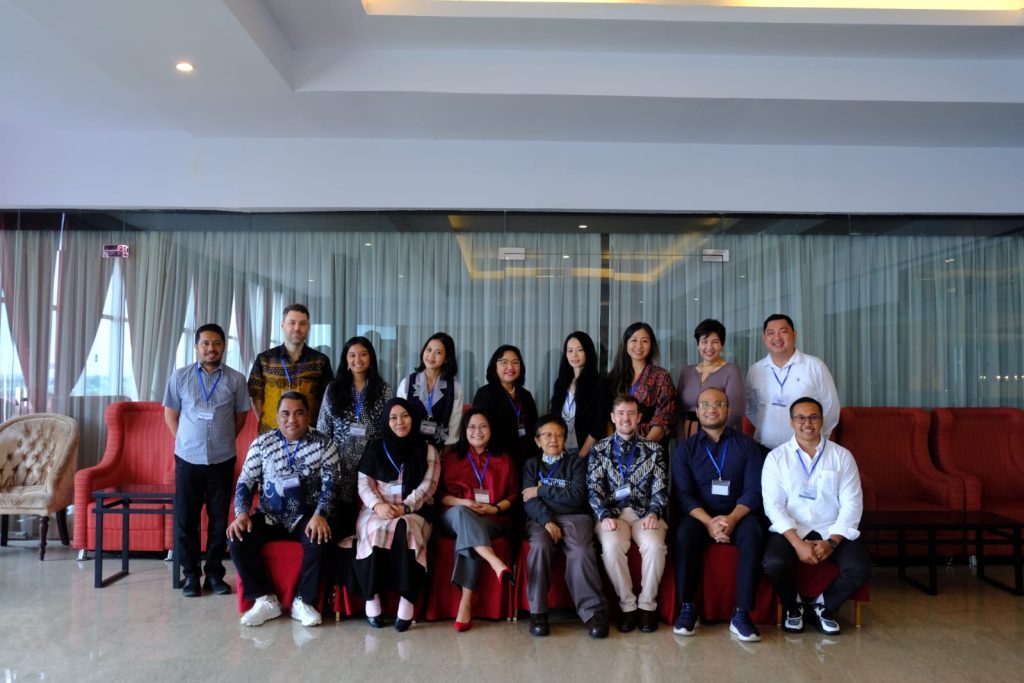
Workshop participants. Photo credit: Scott Edwards

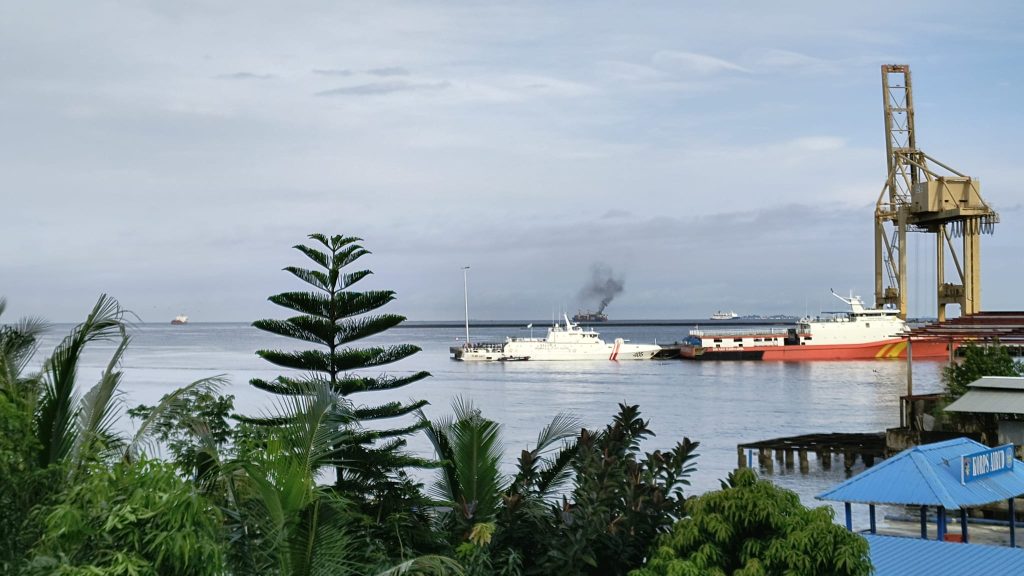
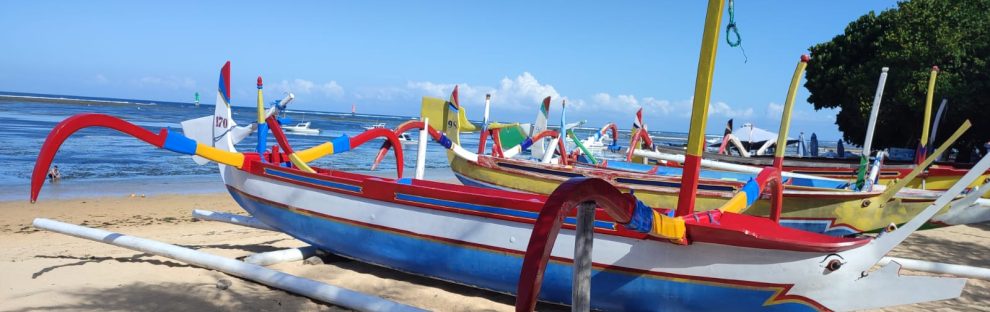
The Strait of Makassar. Photo credit: Senia Febrica

Ocean Justice – towards a diverse and inclusive marine and coastal sector

By Senia Febrica

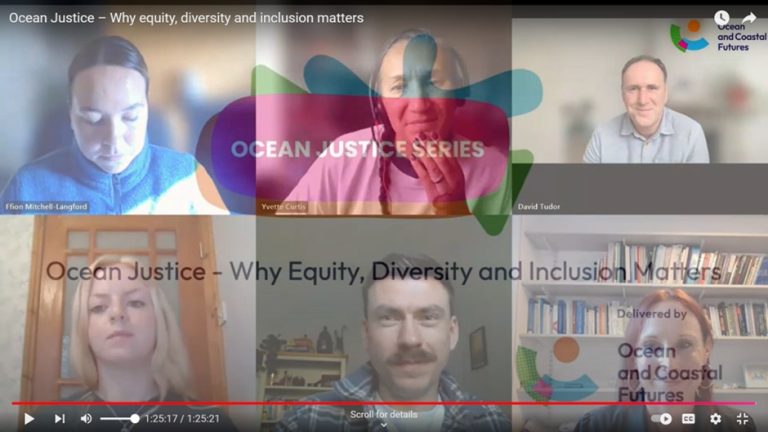
On 14 November 2024 ‘Ocean Justice and the Blue Economy’ principal investigator Dr Celine Germond-Duret took part in a webinar on “Ocean Justice – Why Equity, Diversity and Inclusion Matters”. This event is the first panel of discussion of Ocean and Coastal Futures (OCF)’s Ocean Justice Series. This blogpost summarises key messages highlighted by panellists.

The panel was chaired by the Director of OCF, Dr David Tudor. It brought together leading ocean experts including:

Alan Munro – Founder and Director of Young Sea Changers Scotland

Yvette Curtis – EDI Manager at Surfers Against Sewage and Founder of Wave Whine’s

Ffion Mitchell-Langford – Project Designer & Manager of the Marine Conservation Society’s Hiraeth Yn Y Mór (HYYM) Project, EDI Co-Chair at the North Wales Wildlife Trust, Founder of Future Generation Consultancy and National Marine Parks Lead at Campaign for National Parks

Caitlin Turner – Young marine biologist undertaking an MSc in Marine Vertebrate Ecology & Conservation and a Trustee for Young Sea Changers Scotland.

Celine Germond-Duret – Project investigator of the ‘Sea Sights’ project investigating young people’s connection to the coastal and marine environment; and of the Leverhulme Trust project ‘Ocean Justice and the Blue Economy’; Lecturer at Lancaster University.

The panel centred on two questions:

  • Why we need a more diverse and inclusive marine and coastal sector?
  • Why we need to transfer more power to young people/communities in marine decision-making?

Why we need a more diverse and inclusive marine and coastal sector?

  • Caitlin Turner noted that any issues that affected the ocean will have impacts on everyone. However, the burden is not shared equally across different ocean stakeholders. People with disabilities and minorities are disproportionately affected by environmental issues related to the ocean. These groups’ voices, however, are often not being considered. Caitlin calls for the needs of all ocean stakeholders to be met and their voices to be included in governance processes.
  • Celine Germond-Duret stressed that diversity and inclusivity in marine and coastal sector is something that needs to be done both for ethical and efficiency considerations. Reflecting on development on land, we witnessed conflict and harms being done to Indigenous Peoples due to the lack of inclusivity in designing and conducting conservation and development projects. Such projects also tend to be ineffective in terms of their implementation because of their failures in taking into account local communities’ views, identities, and knowledge.
  • Yvette Curtis drew attention to the fact that the majority of UK marine protected areas (MPAs) are based at the country’s overseas territories. Against this background, Yvette underscored the importance for the UK government to seek inputs from island governments and coastal communities on how to protect these areas. Only by getting the perspectives of these stakeholders the UK government can make critical decisions.
  • Ffion Mitchell-Langford pointed out that diversity and inclusivity in marine and coastal sector is crucial because everyone is responsible to protect the ocean and is steward of the ocean. Capacity strengthening through ocean literacy and locally managed MPAs provide avenues for local stakeholders to be included in conservation and sustainable use of marine resources.

 Why we need to transfer more power to young people/communities in marine decision-making?

  • According to Alan Munro inclusion of young people in ocean governance is critical because young people have ‘out of the box thinking’ that helps to bring new solutions that the sector crucially need. Young people are also the group who will live with the consequences of any decision taken related to ocean and coastal governance. Governments, therefore, will need to work with young people to find solutions that work for everybody.
  • Celine Germond-Duret, Yvette Curtis, Caitlin Turner, and Ffion Mitchell-Langford identified various barriers that need to be addressed to make ocean-decision making process more accessible to young people. Celine identified two important barriers including first, a certain dominant framing of the ocean (e.g. an inhospitable space, not a place of identities and connection). Second, the question of access (e.g. how young people can access blue space). Drawing from her research, Celine illustrated that although some children live less than five miles from the ocean there are difficulties for them to access blue space because of financial costs or social and cultural elements. For example, Celine explained that some children view that coast and sea are not for them because of certain ‘picture’ that they portrayed in their mind when they think of the sea (e.g. the image of white middle-class families walking their dog on the beach). Yvette echoed this point, as she noted that cultural connections, access to blue space, and the continuous portrayal of ocean as elite areas could hinder the inclusion of young people in ocean advocacy. Ffion further mentioned that language and visual representation of ocean and coasts are key barriers for inclusion. To improve inclusion, Ffion suggest making key information and documents relevant to ocean management available not only in English, but also in other languages spoken in the UK (e.g. Welsh). Caitlin emphasised the importance of using language that are accessible to young people and avoid complex policy language with jargons.

Conclusion

Our panellists concluded the event by sharing their insights on how to value, recognise and strengthen efforts to transfer power to young people. Their suggestions are listed below.

  • Working with organisations at grassroot level (e.g. school, community centres) to reach out to young people and find local solutions.
  • Not putting young people in one category as they may come from diverse social-economy and cultural backgrounds.
  • Making young people feel valued, recognising and celebrating their contributions.
  • Involving young people in co-designing research and other activities; maintaining contacts; and being transparent related to outputs generated from the research or other activities.
  • Sharing data that will support the development of the capacity, findability, interoperability, and re-usability of ocean data, information and knowledge.
  • Prioritising bottom-up approach.
  • Valuing different types of sciences including social sciences and knowledge systems including traditional knowledge and their knowledge holders.

The webinar recording is available on the Coastal Futures Youtube channel.

Countdown to UN Ocean Conference 2025: Mainstreaming ocean justice in the blue economy

By Senia Febrica and Celine Germond-Duret

As blue economy initiatives expand around the world and stakeholders further exploit coastal and marine resources, it is critical to deepen our understanding of how the blue economy can be just and fair. This blogpost calls upon all stakeholders attending the UN Ocean Conference 2025 to ensure that traditionally overlooked stakeholders, such as coastal communities, are at the centre of the blue economy process.

In the context of the blue economy, the political declaration of the UN Ocean Conference 2022 noted the contributions of the ocean in providing “decent jobs and livelihoods,…a means for maritime transportation, including for global trade, and” in “playing an essential role in sustainable development, a sustainable ocean-based economy and poverty eradication” (UN Department of Economic and Social Affairs, 2024). Building from the 2022 UN Ocean Conference, France and Costa Rica will co-host the high-level 2025 United Nations in Nice, France, on 9 – 13 June 2025. The overarching theme of the Conference “Accelerating action and mobilising all actors to conserve and sustainably use the ocean” stresses the pressing need to support further and urgent action to conserve and sustainably use the oceans, seas and marine resources for sustainable development.

The concept of blue economy is defined as “the sustainable pursuit of economic activities resulting from the exploitation of coastal and marine resources” (Germond-Duret and Germond, 2022). It has raised both hope that environmental protection will be at the heart of (economic) activities at sea, and concerns that it will facilitate further unsustainable exploitation of coastal and marine resources. The blue economy concept can be seen as being part of a wider “blue acceleration” process, “a race among diverse and often competing interests for ocean food, material, and space” (Jouffray et al., 2020); for example, the debate over deep sea mining illustrates the tension between the prospect of future economic benefits and environmental concerns in the marine space (Childs, 2019).

Current concerns about ocean injustice results from two interacting dynamics. First, a long-standing sea blindness, that is “a general lack of interest for the marine space, and the failure to recognise how it connects and matters to societies, cultures and people’s identity” (Germond-Duret and Germond, 2022); and second, a general disregard for the social element in debates on sustainable development, whether on land or at sea. The social dimension of sustainable development is indeed often overlooked, with current framings situating sustainability solely within the tension between economic growth and environmental protection (forgetting its social dimension in the process) (Vallance et al., 2011; Victor, 2012; Germond-Duret, 2014). Three reports published recently by the UN Special the Special Rapporteur on the promotion and protection of human rights in the context of climate change, Elisa Morgera and the UN Special Rapporteur on the right to development, Surya Deva call for the recognition and consideration of social, cultural and human rights dimensions in blue economy development.  Key points from their reports are listed below.

Report of the Special Rapporteur on the promotion and protection of human rights in the context of climate change to the UN General Assembly on  “Access to information on climate change and human rights” (A/79/176)

  • “States should gather and share information on the quantity and priorities of climate finance projects (see A/HRC/54/31) and just transition programmes, including deep-sea mining activities, with accessible, accurate, credible and timely data to evaluate the effects of these programmes on climate change and human rights, and enable access to remedy and combat corruption (see A/78/155)” (paragraph 17).
  • “States should collect information on carbon finance, just transition, carbon credits and climate technologies from environmental and human rights impact assessments (see A/62/214), accounting for cumulative, indirect and interconnected impacts at all levels and over time, and intersectional analysis of differentiated impacts on vulnerable groups… States should ensure that human rights are integrated into these environmental impact assessments, enabling the meaningful participation of rights holders and consideration of past, ongoing and expected damage from climate change to cultures, tangible and intangible cultural heritage and cultural rights (see A/75/298)” (paragraph 20).

Report of the UN Special Rapporteur on the right to development, Surya Deva on “Right to development of children and future generations” (A/HRC/57/43)

  • “Governments should facilitate the participation of children in preparing annual budgets because the allocation of resources has a direct correlation with the realisation of their rights. Children should also be involved in decisions concerning ocean governance to safeguard their rights” (paragraph 47).
  • “Ensure active, free and meaningful participation of children and representatives of future generations in all policymaking and execution decisions, including those concerning the right to development, the Sustainable Development Goals, annual budgets, climate change, ocean governance, new technologies, trade and investment agreements and public debt” (section B, point d).

Report of the Special Rapporteur on the right to development, Surya Deva on  “Climate justice: loss and damage” (A/79/168)

  • “Precaution. In line with the United Nations Framework Convention on Climate Change and the Paris Agreement, “the best available scientific knowledge” should guide States’ response to climate change. At the same time, lack of scientific certainty should not be used to delay action, and the precautionary principle must be adopted in relation to climate change. For example, if the world does not know enough about how deep-sea mining might affect marine life and the entire ocean ecosystem generally, the precautionary principle should be applied in granting exploration licences. The same could be said about unproven carbon mitigation, capture and storage technology” (paragraph 33(g)).

Recommendations

Drawing from our research project “Ocean Justice and the Blue Economy” we recommend governments, the United Nations system, intergovernmental organisations, international financial institutions, and businesses attending the UN Ocean Conference 2025 to:

  • Prioritise the experiences and voices of local communities in designing, monitoring and implementing blue economy initiatives.
  • Ensure meaningful participation of ocean dependent communities including Indigenous Peoples, local communities, small-scale fishers, women, children and young people in blue economy processes.
  • Strengthen the capacity of ocean dependent communities to participate in blue economy development process at local, national and international levels.
  • Integrate social and cultural considerations in environmental impact assessment when assessing the sustainability of blue economy activities.
  • Share information on blue economy activities with all stakeholders, including local communities in accessible and timely manner.