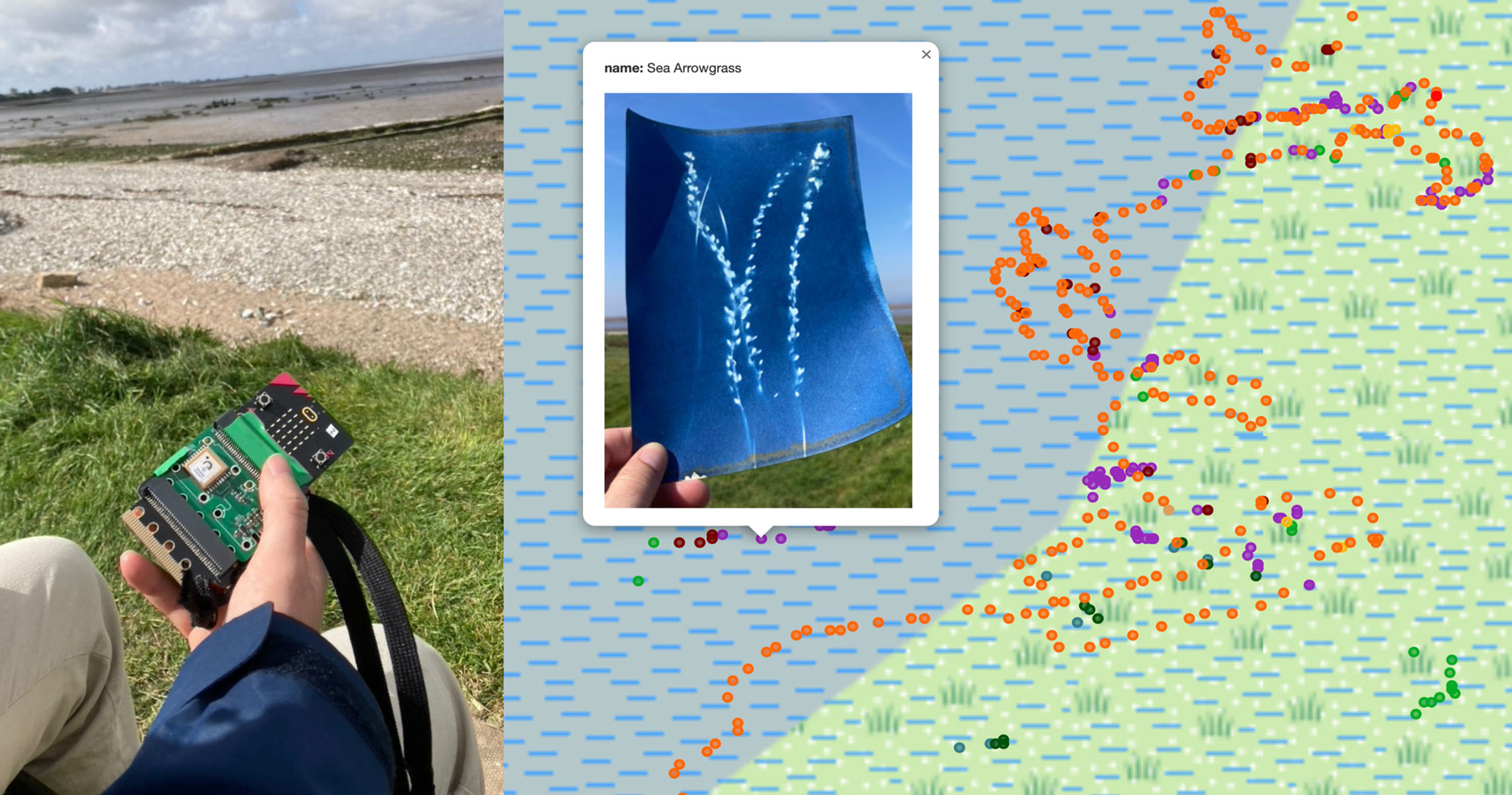
SaMPaS (Salt Marsh Participatory Sensing) is a design-led project for community engagement in salt marsh monitoring and planning regeneration projects. The project toolkit includes technologies for documenting salt marsh features and salt marsh use. It also includes digital mapping software to display data collected by project participants.
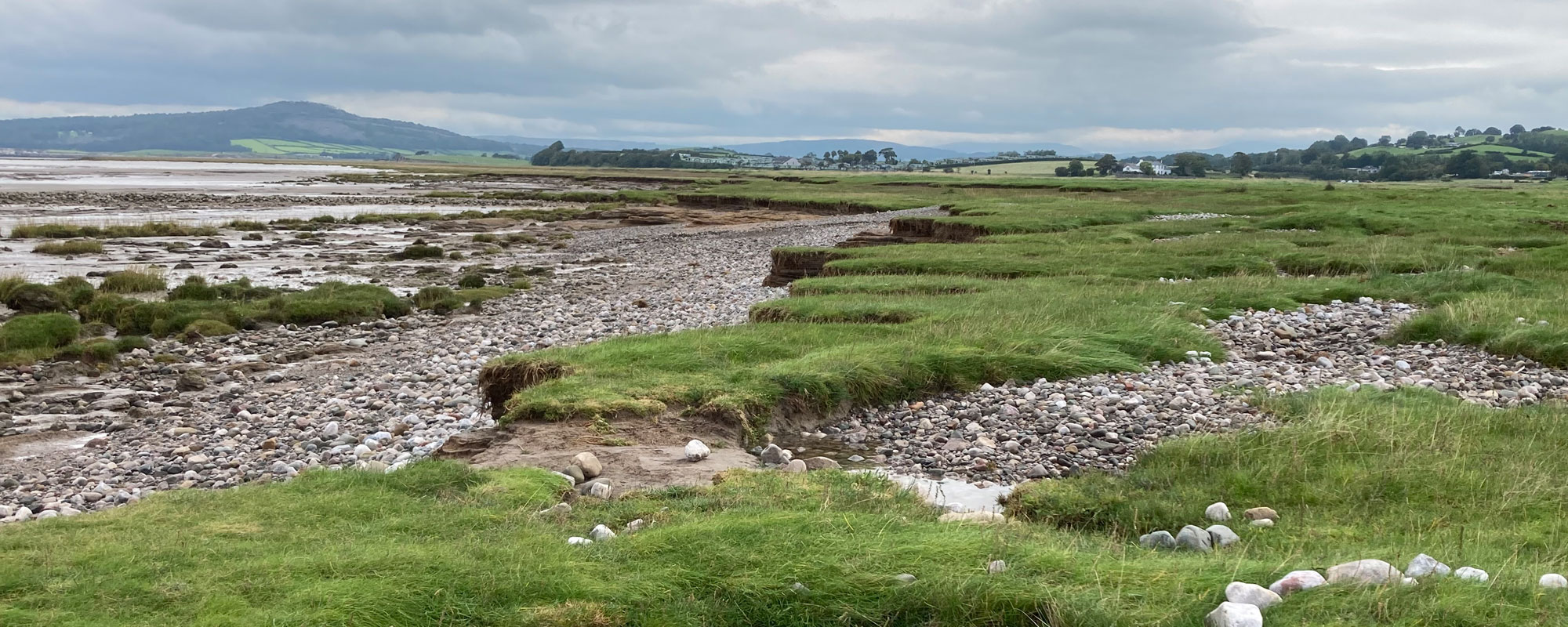
These tools have been designed to support the work of Our Future Coast, particularly at Hest Bank and Jenny Brown’s point in Morecambe Bay. This programme of activities is intended to improve the resilience of local communities to flood risk and coastal erosion by encouraging salt marsh regeneration. Our Future Coast is inviting the community to help in the process of designing more ecologically sound and sustainable flood resilience techniques as opposed to hard concrete structures that are expensive and carbon-intensive to build and maintain.
The SaMPaS tool kit can be used for benchmarking the ecological condition of a site prior to interventions and as the new techniques are implemented to compare the success of different approaches. It can use used to record how people use salt marsh areas and the values they associate with different sites. It could also be used to map desired futures for particular locations.
SaMPaS was funded by the Arts and Humanities Research Council (AHRC). Dr Serena Pollastri (ImaginationLancaster) led the project and Dr Liz Edwards (Future Places Centre) worked on the project. Project partners included Morecambe Bay Partnership, Lancashire Wildlife Trust and Lancashire Council Engineering Department. Ongoing work has been supported by the Future Places Centre and researchers from Computing and Communication at Lancaster University. For further information contact: