Since its inception in 2012, the Financial Narrative Processing (FNP) initiative has established a long-standing tradition of advancing research in Financial NLP. What began as an exploratory project has now grown into a mature and influential series of international workshops and shared tasks, shaping the development of automatic and computer-aided approaches for extracting, summarising, and analysing both qualitative and quantitative financial data.

The 7th edition of FNP (2026) will mark our tenth international event dedicated to this field, underscoring the continued and growing global interest in financial narrative processing. Over the past decade, research that was once largely manual and small-scale in Accounting and Finance has been transformed by Natural Language Processing (NLP) and Machine Learning (ML) methods. We have been at the forefront of this transformation—organising nine major international events to date, introducing widely adopted shared tasks, and releasing datasets and methodologies that have become foundational for the community.

Building on the success of previous workshops—

  • FNP 2025 (6th edition, COLING, Abu Dhabi, UAE),
  • FNP 2023 (5th edition, IEEE Big Data, Sorrento, Italy),
  • FNP 2022 (4th edition, LREC, Marseille, France),
  • FNP 2021 (3rd edition, standalone online),
  • FNP-FNS 2020 (joint workshop at COLING),
  • FNP 2018 (1st edition, LREC, Japan),
  • FNP 2019 (2nd edition, NoDaLiDa, Finland), and
  • Multiling 2019 FNS task (RANLP, Bulgaria)—

we have consistently received strong positive feedback from participants and the wider research community. Our workshops have become a recognised forum where NLP and Finance intersect, fostering collaboration between computational linguists, data scientists, economists, and accounting scholars.

The impact of the series is evidenced not only by citations and proceedings indexed in major digital libraries (including the ACL Anthology, IEEE, and ELRA) but also by the growing number of researchers and practitioners applying Financial NLP in real-world contexts.  Our workshop series are contributing to the field of Financial NLP evident by Google Citations and proceedings on ACL anthology 

As in previous editions, FNP 2025 will be on site and in-person (there will be no option for it to be virtual or hybrid). 

For the 6th FNP shared task, we will continue working in two languages (English, Spanish) and we will introduce  a new FinCausal Shared Task:

  • Financial Causality Detection (FinCausal 2026) on hybrid Question Answering: detect causal effects in financial disclosures in English and Spanish. The dataset is a combination of extractive and generative QA. Questions will be formulated abstractedly, while answers will be extractive. In some fragments, either causes or effects will be asked and the answer should be a segment extracted from the text. The response evaluation metric will combine both exact matching and semantic similarity. Two new datasets will be created in English and Spanish.

The shared tasks attracted more than 200 participants within the last 4 FNP editions, for this year we are expanding the dataset by making the tasks more challenging.


Previous Workshops:

  1. The 1st Financial Narrative Processing (FNP 2018) workshop at the 11th Edition of the Language Resources and Evaluation Conference (LREC 2018), May 2018 in Miyazaki, Japan. 11 papers with around 20 attendees.

o   http://wp.lancs.ac.uk/cfie/fnp2018FNP 2018 Full Proceedings.

2-3. First and Second Workshops on Textual Analysis Methods in Accounting and Finance at Lancaster University Management School (LUMS), Lancaster University, September 2018 and September 2019 in Lancaster, UK. 40 Attendees each.

o   http://wp.lancs.ac.uk/cfie/tamaf2018/ 

o   http://wp.lancs.ac.uk/cfie/tamaf2019/ 

  1. The 2nd Financial Narrative Processing (FNP 2019) workshops at the 22nd Nordic Conference on Computational Linguistics (NoDaLiDa’19), Turku, Finland. 11 papers (more than 20 registered)

o   http://wp.lancs.ac.uk/cfie/fnp2019 . FNP 2019 Proceedings.

  1. The Multiling Summarisation workshops 2011 (TAC, USA), 2013 (ACL, Bulgaria), 2015 (SIGDIAL, Czech), 2017 (ACL, Canada) and 2019 (RANLP, Bulgaria). Including the First Financial Narrative Summarisation Task at Multiling 2019 at RANLP 2019 Varna, Bulgaria. 15-20+ attendees each year.

o   http://multiling.iit.demokritos.gr 

  1. The 1st Joint Workshop on Financial Narrative Processing and MultiLing Financial Summarisation (FNP-FNS 2020) workshop at The 28th International Conference on Computational Linguistics (COLING’2020), Barcelona, Spain on 12 December 2020. 37 papers, around 30 attendees.

http://wp.lancs.ac.uk/cfie/fnp2020 . FNP 2020 Proceedings.

  1. The 3rd Financial Narrative Processing (FNP 2021) workshops as a stand alone event organised by Lancaster University and Yseop, Lancaster, United Kingdom. 22 papers (125 registrations and attendees from 87 cities around the globe – Free Event -)

o   http://wp.lancs.ac.uk/cfie/fnp2021 . FNP 2021 Proceedings.

  1. The 4th Financial Narrative Processing (FNP 2022) held at the 13th Edition of the Language Resources and Evaluation Conference (LREC 2022), Marseille, France, on 24 June 2022. 25 papers (30 in person attendees 20 online)

o   http://wp.lancs.ac.uk/cfie/fnp2022/ . FNP 2022 Proceedings.

  1. The 5th Financial Narrative Processing (FNP 2023) held at the 2023 IEEE International Conference on Big Data (BigData) 15-18 Dec, Sorrento, Italy. 20 papers (15 in person attendees 5 online)

o   http://wp.lancs.ac.uk/cfie/fnp2023/ . FNP 2023 Proceedings.

  1. The 65th Financial Narrative Processing (FNP 2025) held at The 31st International Conference on Computational Linguistics (COLING’2025), Abu Dhabi, UAE as a joint event with FinNLP 2025. 49 papers (50 in person attendees 15 online) 

o   http://wp.lancs.ac.uk/cfie/fnp2025/ . FNP 2025 Proceedings.


Summary of the Call:

We invite submissions of original, unpublished research—completed or ongoing—that advances the field of Financial Natural Language Processing (Financial NLP) and Financial Text Analysis. Contributions may focus on theoretical insights, methodological innovations, datasets and resources, or applied systems. We also welcome negative results and papers that reflect on practical challenges faced in both academic and industrial contexts.

Topics of Interest

Submissions may address, but are not limited to, the following areas:

  • Core technologies for financial narratives: morphological analysis, tokenisation, disambiguation, part-of-speech tagging, named entity recognition, chunking, parsing, semantic role labelling, sentiment analysis, document quality, and advanced readability metrics.
  • Ethics, diversity, and wellbeing: using NLP to detect misreporting and biases in financial narratives relating to gender, ethnicity, representation of women at work, employee wellbeing, mental health, and organisational stability.
  • Resources and tools: financial dictionaries, annotated corpora, benchmarks, software, and novel methodologies.
  • Summarisation in financial contexts: single- and multi-document summarisation, headline generation, evaluation of summaries, and cross-domain or cross-lingual summarisation (e.g., company blogs, market briefs, product reviews).
  • Social media and financial discourse: analysing online platforms to capture public opinion and sentiment around financial events.
  • Multilingual and cross-regulatory perspectives: exploring financial narratives across languages, dialects, and varying international regulatory regimes.
  • Ongoing and preliminary research: work-in-progress studies with promising early findings.
  • Negative results: experiments showing where methods (including state-of-the-art models such as BERT and its variants) succeed or fail across languages, domains, or tasks.

Submission:

Submissions may include work in progress as well as finished work. Submissions must have a clear focus on specific issues pertaining to Financial NLP or other related disciplines.


Submissions may be of two types:

  • Long papers – up to 8 pages maximum, presenting substantial, original, completed, and unpublished work.
  • Short papers – up to (4 pages, describing a small focused contribution, negative results, system demonstrations, etc.


Workshop Format:

  • The workshop will run as a in-person workshop at the COLING 2025 Venue in Abu Dhabi, UAE.
  • Number of attendees estimated: 30-50 in person.


Provisional Key Dates:

  • 10 December 2025: 1st Call for Papers announcement
  • 10 January 2026: 2nd Call for Papers announcement
  • 15 January 2026: (Shared-task only) Training set release
  • 15 February 2026: (Shared-task only) Blind test set release
  • 1 March 2026: (Shared-task only) System submission deadline
  • 10 March 2026: (Shared-task only) Release of results
  • 20 March 2026: Paper submission deadline (workshop and shared-task papers)
  • 15 April 2026: Notification of paper acceptance
  • 30 April 2026: Camera-ready paper deadline
  • 11–16 May 2026: LREC 2026 Conference and Workshops (workshop date TBC within this window)

Organisers: 

  • Mo El-Haj, VinUniversity, Vietnam. Lancaster University, UK (FNP Chair Organiser)
  • Antonio Moreno Sandoval, UAM, Spain (Programme Chair)
  • Chung-Chin Chen, AIST, Japan (Programme Chair) 
  • Paul Rayson, Lancaster University, UK (FNP Advisor)
  • Jordi Porta, UAM-RAE, Spain (Program coordinator)
  • Blanca Carbajo Coronado, UAM, Spain (FinCausal Coordinator) 
  • Paloma Martínez, UC3M, Spain (Publication Chair)
  • Doaa Samy, Cairo University and LLI-UAM, Spain (Publicity Chair)


Our organising team is ethnically diverse and gender-balanced, with extensive expertise in both Financial NLP research and the successful delivery of academic events. Over the past five years, we have organised workshops as part of leading international NLP conferences—including LREC, COLING, NoDaLiDa, and RANLP—as well as standalone events. This experience has equipped us with the skills to manage in-person, online, and hybrid formats effectively. In addition, we have hands-on experience in setting up and running platforms such as CodaLab, EvalAI leaderboards, and Gather Town, ensuring smooth coordination of shared tasks, participant interaction, and community engagement.


Organising Committee:


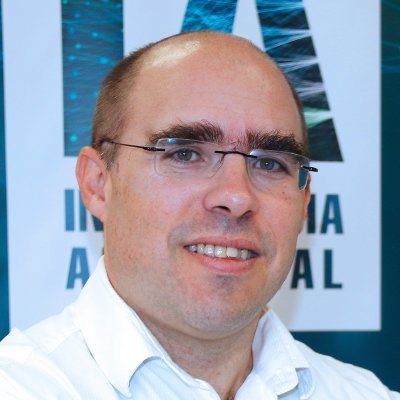
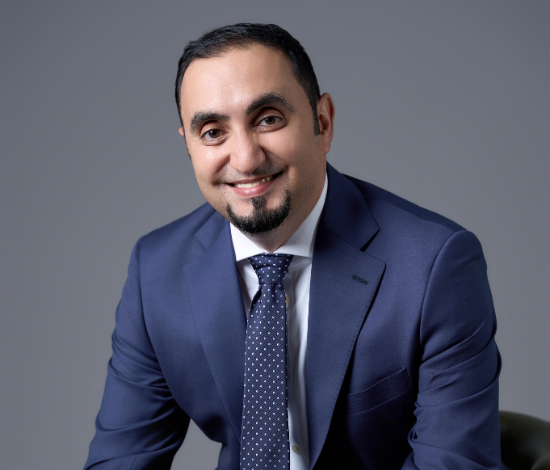
  • Dr Mo El-Haj (General Chair),  Reader (Associate Professor) at VinUniversity, Vietnam and Visiting Professor at Lancaster University, UK. His main research is on Financial Natural Language Processing, Information Extraction and Text Summarisation. He is the founder and chair organiser of FNP workshop series since 2018, and has organised various NLP workshops and events at conferences such as ACL/EACL/EMNLP/LREC/RANLP/COLING and NODALIDA, m.el-haj@lancaster.ac.uk, https://elhaj.uk/
  • Prof Antonio Moreno-Sandoval (Programme Chair), is a Professor at the General and Computational Linguistics department at the Autonomous University of Madrid. He has long experience in organising workshops at top NLP conferences such as ACL/EMNLP/EACL/LREC and his research group is leading the work on Spanish Financial Narrative Processing . antonio.msandoval@uam.es, https://portalcientifico.uam.es/en/ipublic/researcher/260535
  • Dr Chung-Chi Chen (Programme Chair), Researcher, Artificial Intelligence Research Center, National Institute of Advanced Industrial Science and Technology, Japan. Chung-Chi is also the Chair organiser of the long running FinNLP workshop c.c.chen@acm.org https://nlpfin.github.io/ 
  • Prof Paul Rayson (FNP Advisor), is the director of the UCREL research centre and a Professor in the School of Computing and Communications at Lancaster University. A long-term focus of his work is the application of semantic-based NLP in extreme circumstances where language is noisy e.g. financial disclosures. Paul has organised many conferences, workshops and events for the past 25 years, this includes 2018-2022 FNP workshops p.rayson@lancaster.ac.uk, https://www.lancaster.ac.uk/scc/about-us/people/paul-rayson
  • Dr Jordi Porta (FNP Program coordinator),  Part-time Associate Professor at Computer Science Dept at UAM and also Senior Computer Engineer at Real Academia of Spanish Language. He has organised various NLP workshops and events at conferences and participated in share-tasks on FNP. jordi.porta@uam.es.
  • Prof. Paloma Martínez (Publication Chair), is a Professor of Computer Science at University Carlos III of Madrid (UC3M), Spain. She is the leader of the Human Language and Accessibility Technologies (HULAT) team. Prof. Martinez has extensive experience in journal and conference editorial boards. pmf@uc3m.es. https://hulat.inf.uc3m.es/en/nosotros/miembros/pmf
  • Blanca Carbajo Coronado (FinCausal Coordinator) is a PhD student at the Universidad Autónoma de Madrid with a scholarship (FPU) awarded by the Spanish Ministry of Science, Innovation and Universities. Her thesis deals with computational detection of cause-effect relations in financial narratives. She participated in FNP 2022 in the compilation of the Spanish datasets for the FNS and FinTOC tasks, and in FinCausal 2023. blanca.carbajo@uam.es ,https://portalcientifico.uam.es/en/ipublic/researcher/331702
  • Dr Doaa Samy (Publicity Chair) is an Associate Researcher at the Computational Linguistics Laboratory, Autónoma University of Madrid (LLI-UAM) and a tenured Associate-Professor of Computational and Applied Linguistics at Cairo University, Egypt. Doaa has long experience in organising workshops on NLP topics related to Language Technologies.  doaasamy@cu.edu.egwww.lllf.uam.es/~doaa/ 


 Programme Committee (Confirmed, through serving on previous FNP workshops):

  • Antonio Moreno Sandoval (UAM, Spain)
  • Vasiliki Athanasakou (SMU, Canada)
  • Kim Trottier (HEC, Canada)
  • Doaa Samy (Cairo University, Egypt and LLI-UAM)
  • Blanca Carbajo Coronado (UAM, Spain)
  • Ahmed AbuRa’ed (Universitat Pompeu Fabra, Spain), 
  • Nikiforos Pittaras (NCSR, Demokritos).
  • Catherine Salzedo (LUMS, Lancaster University, UK)
  • Denys Proux (Naver Labs, Switzerland)
  • George Giannakopoulos (SKEL Lab – NCSR Demokritos)
  • Haithem Afli (Cork Institute of Technology, Ireland)
  • Houda Bouamor (CMU, Qatar)
  • Mo El-Haj (SCC, Lancaster University, UK)
  • Marina Litvak (Sami Shamoon College of Engineering)
  • Martin Walker (University of Manchester, UK)
  • Paul Rayson (SCC, Lancaster University, UK)
  • Simonetta Montemagni ( ILC, Italy)
  • Steven Young (LUMS, Lancaster University, UK) 
  • Scott Piao (SCC, Lancaster University, UK)
  • Mohan Subbiah (LUMS, Lancaster University, UK)
  • Paulo Alves (Universidade Católica Portuguesa)
  • Thomas Schleicher (MBA, Manchester University)
  • Ana Gisbert (Accounting, UAM, Spain)
  • Ans Elhag (Lancaster University, UK)
  • Ana García Serrano (UNED, Spain)
  • John MConroy (IDA Center for Computing Sciences)
  • Elena Lloret (University of Alicante, Spain)
  • Vangelis Karkaletsis (NCSR Demokritos)
  • Juan Cigarrán (UNED, Spain)
  • Pablo Haya (IIC, Spain)
  • Mark Last (Ben-Gurion University of the Negev)
  • Natalia Vanetik (Sami Shamoon College of Engineering)   
  • George Petasis (NCSR Demokritos, Greece
  • Paloma Martínez (UC3M, Spain)
  • Peter Rankel (Elder Research Inc., USA)
  • Juyeon Kang (Fortia Financial Solutions, France)
  • Ismail  El Maarouf (Imprevicible, France)
  • Oi Yee Kwong (The Chinese University of Hong Kong) 
  • Stefan Evert (CS, Friedrich-Alexander-Universität Erlangen-Nürnberg, Germany)
  • Ahmet Aker (CS, Sheffield University, UK)
  • Marta Guerrero (IIC, Spain)
  • Horacio Saggion (Universitat Pompeu Fabra)