

FNP 2027
The 8th Financial Narrative Processing Workshop (FNP 2027)
EACL 2027, Greece (TBC)
Workshop Overview
Since its launch at LREC 2018 in Miyazaki, the Financial Narrative Processing (FNP) initiative has developed into a well-established international forum for research in Financial NLP. Initially conceived as an exploratory effort, FNP has grown into a mature and influential series of workshops and shared tasks advancing automated and computer-assisted methods for extracting, summarising, and analysing qualitative and quantitative financial information.
The 8th edition of FNP, to be held at EACL 2027 in Greece, marks the twelfth international Financial NLP event organised under the FNP initiative and the eighth dedicated FNP workshop. This reflects the continued growth of a field that has moved from largely manual, small-scale analyses towards increasingly sophisticated methods based on Natural Language Processing and Machine Learning. FNP has supported this development by organising major international events, introducing widely adopted shared tasks, and releasing datasets and methodologies that have become important resources for the Financial NLP research community.
Previous Events
Since 2018, we have organised ten Financial NLP–related events, summarised below.
- 1st FNP – LREC, 2018, Japan – Papers: 11 | Participants: 20
- TAMAF-1 – Lancaster University, 2018, UK | Participants: 40
- TAMAF-2 – Lancaster University, 2019, UK | Participants: 40
- 2nd FNP – NoDaLiDa, 2019, Finland – Papers: 11 | Participants: 25
- FNS – RANLP, 2019, Bulgaria | Participants: 20
- FNP–FNS – COLING, 2020, Spain – Papers: 37 | Participants: 30
- 3rd FNP – Online, 2021, UK – Papers: 22 | Participants: 120
- 4th FNP – LREC, 2022, France – Papers: 25 | Participants: 50
- 5th FNP – IEEE Big Data, 2023, Italy – Papers: 20 | Participants: 20
- 6th FNP – COLING, 2024–25, UAE – Papers: 49 | Participants: 65
- 7th FNP – LREC, 2026, Spain – Papers: 20| Participants: 50
Shared Task at FNP 2027
🪙 Question Answering over Greek Financial Reports with Retrieval-Augmented Generation (GreekFinRAG)
The shared task focused on advancing question answering for the Greek language and the Greek financial market through retrieval-augmented generation. Participants will develop systems that answer natural-language questions using ten years of annual reports from companies listed on the Athens Stock Exchange, covering tasks from retrieving financial figures, comparing companies, analysing trends over time, and performing basic numerical reasoning. GreekFinRAG provides a distinctive benchmark for an important yet underrepresented language and market, encouraging the development of reliable AI tools for Greek financial information.
🪙 Financial Causality Detection (FinCausal 2027)
Our longest-running shared task, now in its sixth year.
New in 2027:
- In FinCausal 2026, we have introduced more features and innovations:
- Complete review of the previous datasets, removing ambiguous or very simple cases. More than 500 new fragments with complex relationships have been added (such as a causal chain of three or more elements).
- Rephrasing of the abstractive questions in 10% of the cases, to create a dataset that requires more advanced reasoning and is less dependent on similarity to the original text.
- Random partitioning of the training and test sets, based on the new 2026 dataset. In this way, the innovations are distributed evenly.
- Introduction of an LLM-as-a-judge–based evaluation metric, which scores system responses on a 1–5 scale according to their adequacy. This metric replaces the previous SAS + Exact Match evaluation scheme and aligns FinCausal with current practices adopted in recent shared tasks and competitions.
Invited Speaker
 Prof. Vasiliki Athanasakou
Professor in Accounting and Finance, Saint Mary’s University, Canada.
Call for Papers
We invite submissions of original, unpublished research in Financial NLP and Financial Text Analysis, including theoretical work, methods, datasets, resources, applications, and negative results.
Topics include (but are not limited to):
- Core technologies for financial narratives: morphological analysis, tokenisation, disambiguation, part-of-speech tagging, named entity recognition, chunking, parsing, semantic role labelling, sentiment analysis, document quality, and advanced readability metrics.
- Ethics, diversity, and wellbeing: using NLP to detect misreporting and biases in financial narratives relating to gender, ethnicity, representation of women at work, employee wellbeing, mental health, and organisational stability.
- Resources and tools: financial dictionaries, annotated corpora, benchmarks, software, and novel methodologies.
- Summarisation in financial contexts: single- and multi-document summarisation, headline generation, evaluation of summaries, and cross-domain or cross-lingual summarisation (e.g., company blogs, market briefs, product reviews).
- Social media and financial discourse: analysing online platforms to capture public opinion and sentiment around financial events.
- Multilingual and cross-regulatory perspectives: exploring financial narratives across languages, dialects, and varying international regulatory regimes.
- Ongoing and preliminary research: work-in-progress studies with promising early findings.
- Negative results: experiments showing where methods (including state-of-the-art models such as BERT and its variants) succeed or fail across languages, domains, or tasks.
Submission Types
-
Long papers: Up to 8 pages
-
Short papers: Up to 4 pages
📢 Submission URL: TBA
Key Dates
- 13 October 2026: First call for workshop papers
- 13 November 2026: Second call for workshop papers
- 15 December 2026: Direct paper submission deadline
- 22 December 2026: Pre-reviewed ARR commitment deadline
- 5 January 2027: Notification of acceptance
- 19 January 2027: Camera-ready paper deadline
- 9 February 2027: Proceedings deadline
- 12 February 2027: Pre-recorded video deadline
- 9–14 March 2027: TBA
Organisers:
General Chair:
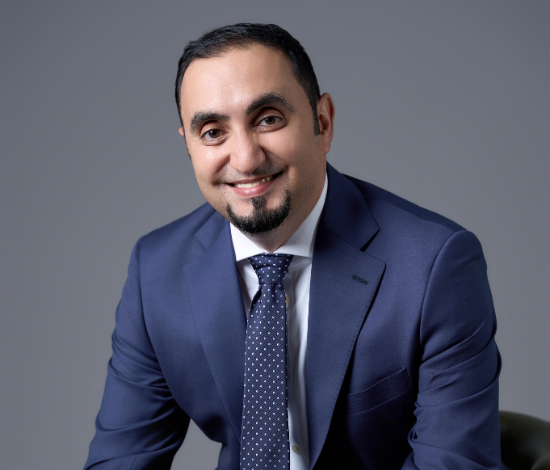 |
Dr Mo El-Haj Reader/Associate Professor, VinUniversity, Vietnam; Lancaster University, UK |
Publicity Chairs
|
|
Prof. Vasiliki AthanasakouProfessor in Accounting and Finance, Saint Mary’s University, Canada. |
 |
Prof. Paul Rayson Director of UCREL Research Centre, Lancaster University, UK |
Programme Chairs
 |
Prof. Antonio Moreno Sandoval Full Professor, Universidad Autónoma de Madrid (UAM), Spain |
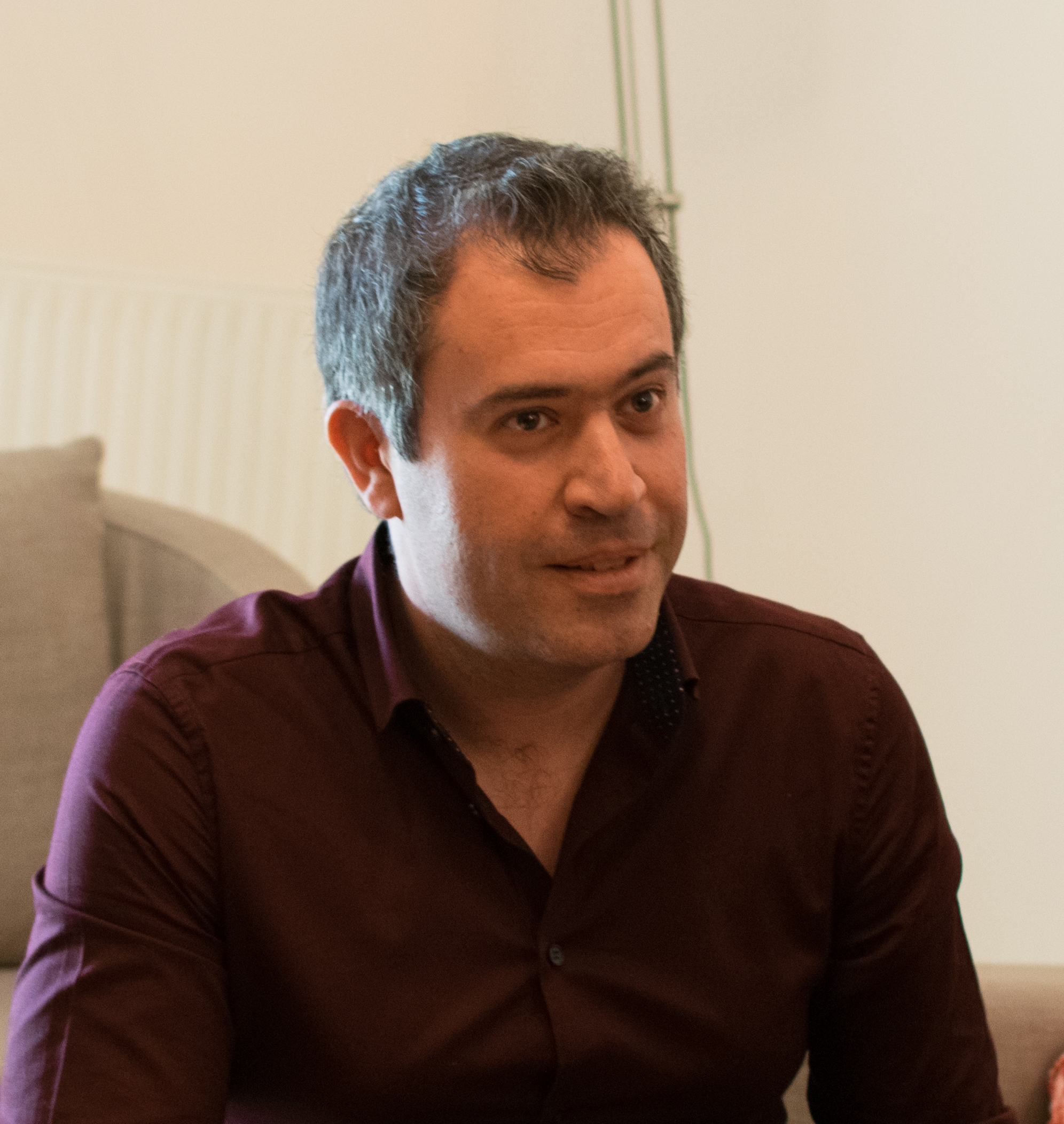 |
Dr Ilias Zavitsanos Research Scientist and Team Lead at NCSR “Demokritos”, Greece |
 |
Dr. George Giannakoplous Co-founder, Administrator and Member of the Board of SciFY and an unrepentant researcher at NCSR “Demokritos”, Greece |
Publication Chair
 |
Dr. Aris Kosmopoulos Machine Learning expert and Principal Software Engineer at SciFY, Greece |
Shared-Task Chair
 |
NLP Research Assistant, CECS, VinUniversity, Vietnam. |
Review Chair
 |
Chi Minh Nguyen NLP Research Assistant, CECS, VinUniversity, Vietnam. |
Scholarly Impact
FNP has built a strong research presence, producing influential datasets, widely cited papers, and long-running shared tasks. Citation records are publicly available:
-
Google Scholar: https://scholar.google.com/citations?user=8Qn7yJ8AAAAJ
-
ACL Anthology: https://aclanthology.org/venues/fnp/
- LREC 2018: http://lrec-conf.org/workshops/lrec2018/W27/pdf/book_of_proceedings.pdf
Programme Committee:
- Antonio Moreno Sandoval (UAM, Spain)
- George Giannakopoulos (SKEL Lab – NCSR Demokritos)
- Mo El-Haj (VinUniversity, Vietnam, Lancaster University, UK)
- Paul Rayson (SCC, Lancaster University, UK)
- Ana García Serrano (UNED, Spain)
- Paloma Martínez (UC3M, Spain)
- Yanco Amor Torterolo Orta (UNED, Spain)
- Chung-Chi Chen (NIAIST, Japan)
- Paloma Martínez Fernández (Universidad Carlos III de Madrid, Spain)
- Jordi Porta (UAM, Spain)