 |
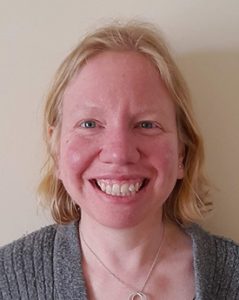
Professor Heather BrownHeather Brown is a professor of Health Inequalities at Lancaster University and is the PI on this project. Her research interests are in complex policy evaluation using large datasets. She is particularly interested in the intersection between health and the environment from a social justice framework. Heather will be co-leading the health economic work package to identify the health, economic and environmental costs and benefits of delivering virtual wards compared to treatment in hospital. |
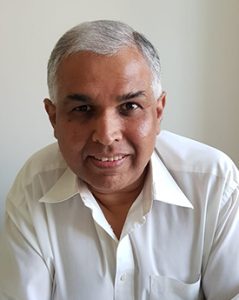 |
Rashmi KumarRashmi is a carer for family members with multiple long term health conditions, chronic respiratory disease, cardiovascular disease, and dementia. He works with diverse and socio-economic deprived communities to improve access, support and equity in healthcare. He is passionate to improving patient voices, outcome and equity for all across complex health and care systems. Trustee of a large patient participation groups (PPGs) Network (50+ groups) working with GP practices, Primary Care Partners (PCNs), several Integrated Care Partnership (ICPs), and hospital trusts in England and Wales. Rashmi works with policy makers, commissioners and international support partners advocating for collaborative, respectful and balanced equitable access which will systematically and effectively develop meaningful care for all with inclusive patient and public involvement. |
 |
Dr Bethany GillBethany Gill is a Senior Research Associate at Lancaster University. On this project she is co-leading Work Package 2 with Paula Wheeler. Work Package 2 is looking to understand more about patient and carer perspectives on virtual wards and carbon emissions. Bethany’s work involves using qualitative methods to include the community voice in research. Outside of research, Bethany loves walking up hills, reading books and baking cakes. |
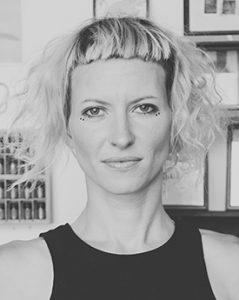 |
Martha BreezeMartha Breeze is a writer, artist, and public contributor with a strong interest in ethical action and how large-scale policy decisions affect individuals. She is currently working on an extended research-essay in the form of creative non-fiction, exploring systems and how they are translated on ground level. Her background in the arts has given her experience interpreting complex ideas and translating them into accessible, engaging formats. She is particularly interested in public understanding, lived experience, and ensuring that research and policy remain grounded in real human outcomes. |
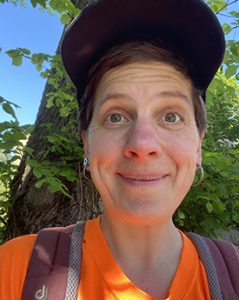 |
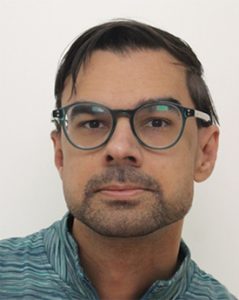
Debbie HardMy name is Debbie, a maker and artist based in Todmorden, West Yorkshire. Passionate about the natural world since I can remember which has evolved in to keen climate awareness. Raising a disabled child who one day will likely benefit from virtual wards for acute care, himself – it fills my heart if this creative mama can help the system he will one day find himself in reduce its carbon footprint and therefore our own! Proud to be involved in this project, bit different to doing silly drawings about emotions! |
 |
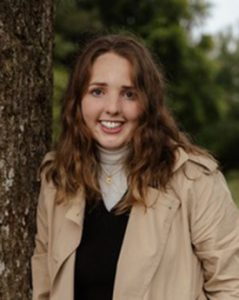
Jamie HunterMy name is Jamie Hunter living in Southport, Merseyside, and I am a Public Contributor Champion for the NIHR ARC NWC Analogue2Digital Theme. In school my favourite subjects were Science mainly Biology and Physics as well as Computing and I currently hold a computing degree. My passion for being involved in this Virtual Wards health project at Lancaster University is the hope that digitalised technology can help provide better health and social care for cancer patients wanting to be cared for at home like my Mum who sadly passed away at our family home in Liverpool, aged 62 years old. Also to provide better health and social care for people suffering with the health condition known as Myalgic Encephalomyelitis (M.E.) which requires good care provided at home. My best friend Hazel, lives in Southport and has M.E., and we have been best friends for six years and hopefully for many more years to come. |
 |
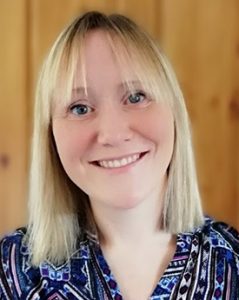
Claire Frost-PenningtonClaire is passionate about improving healthcare services for patients, families, and communities. She is particularly interested in how healthcare can become more sustainable while still providing compassionate, high-quality care closer to home. Claire’s professional background is in project management, with experience working across large programmes, stakeholder engagement, and organisational change. Alongside her professional experience, she brings the perspective of a parent and community member with a strong interest in how healthcare systems affect everyday life. Claire is especially interested in ensuring research reflects real-world experiences and helps shape practical improvements for patients and families. Outside of work, Claire enjoys the outdoors, hill walking, and spending time with her family in the countryside. |
 |
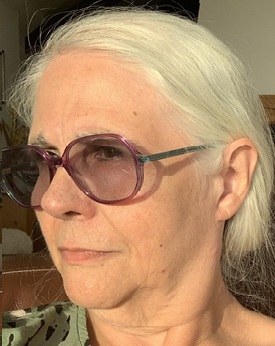
Claire HaydayClaire joined the team as Community Coordinator, working closely with Hilary to facilitate and support the Public and Community Advisory panel for the project. Claire is passionate about collaborative partnership working, and public and patient involvement and engagement (PPIE) in research. This way of working helps to form more joined-up ways of thinking which will improve health research, and ultimately make a real difference to people’s lives. Claire’s background is working in Project Management both in the third sector – in arts and heritage, volunteering and in public health – as well as in the management of large research programmes. Claire loves to be outside in her spare time, especially walking in the hills with her family including her rescue dog, Bramble. |
 |
Hilary GarrettFiring my passion for this project is the desire to protect our planet from the ravages of pollution and the damage caused by carbon emissions. I live in Burnley in East Lancashire and was brought up in Rochdale. I have clear memories of the thick smog caused by pollution from coal fires and the forest of mill chimneys of my childhood. Carbon emissions today may not be as visible to us in the UK as they were back then but are no less harmful to our individual health and to the safety of our planet. I retired from paid employment some years ago but find myself busier than ever. Pre-retirement I worked in the NHS as a Surgical ICU Sister, in Further Education as a College Lecturer and manager and in Local Government as Early Years Training Lead for Lancashire. Over the years I have had numerous caring and advocacy roles for family members. I continue as a carer, looking after my husband, who struggles with many conditions including heart failure and frailty. This gave me experiences of ‘Hospital at Home’ services; another key driver in my wish to support this worthwhile project. My involvement with health and care research has over the last five years become extensive at local, regional and national levels. I became an Honorary Researcher with Lancaster University four years ago and am an Associate Researcher for this study. We have a remarkable group of Public Contributors, collaborating with an impressive Professional and Academic team. I feel privileged to be able to bring my lived experience to support them all and ensure a clear public and community voice is effective throughout the life of this research. |
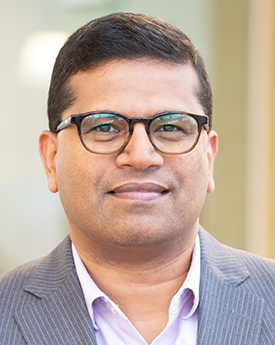 |
Professor Dakshina De SilvaDakshina G. De Silva is Professor of Economics at Lancaster University and Co-Investigator of the project He leads Work Package 4, which examines how virtual wards affect energy use, productivity, costs, and carbon emissions in acute care. His research background spans environmental and natural resource economics, energy economics, industrial organization, regional economics, and applied microeconomics. This expertise is central to WP4, which uses empirical economic methods to assess whether virtual wards reduce hospital-based energy consumption and emissions, how changes in the energy mix influence healthcare productivity, and whether some emissions are shifted from hospitals to patients’ homes. Professor De Silva has published widely on environmental justice, energy production, regional economic impacts, procurement, and market design. His work has informed policy discussions on environmental justice and energy equity, including contributions to the UK Cabinet Office’s Levelling Up project. In WP4, he brings this experience to understanding the economic and environmental consequences of new models of healthcare delivery. |
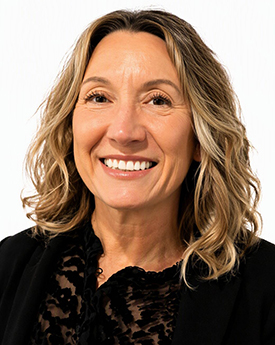 |
Paula WheelerPaula is a senior public health professional with more than 30 years’ experience within the NHS and wider health and care settings. Paula is co leading WP2 with Bethany Gill where she will support the mobilisation of learning and knowledge in relation to people’s experiences of virtual wards and carbon reduction, Paula enjoys time outside, playing padel and running. She s also a keen fan of football and takes in matches at The Etihad following her team Manchester City! |
 |
Dr Reuben LarbiReuben is a Research Fellow at Lancaster University and the Project Manager for the study. His research focuses on climate change and population health, with particular interests in health inequalities, exposure to climatic hazards such as flooding, and sustainable healthcare. He works across disciplines, using quantitative, qualitative, and spatial methods. Within the project, Reuben will work with Dakshina on the energy use and carbon emissions work package (WP4), and with Heather on the health economics work package (WP5) to evaluate the health, economic, and environmental costs and benefits of delivering care through virtual wards compared with traditional hospital-based treatment. He will also support the collection and analysis of quantitative data for other work packages. |
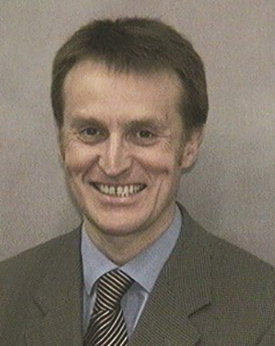 |
Professor Andrew CleggAndrew is Professor of Health Services Research at the University of Lancashire, leading the ‘Synthesis, Economic Evaluations and Decision Science’ (SEEDS) Group and the NIHR ARC NWC ‘Evidence4Impact’ cross-cutting theme. He is particularly interested in the use of evidence synthesis and health economics to inform decision-making about the provision and use of health and social care. Previously Andrew was Director of the Southampton Health Technology Assessments Centre (University of Southampton) (2002-2014), an NIHR centre of excellence, supporting the National Institute for Health and Care Excellence guidance and guidelines programmes. He has contributed to systematic reviews and economic evaluations assessing medicines, devices, procedures, diagnostics, screening programmes and health promotion/public health programmes in a broad range of priority areas, including cardiovascular disease, cancer, obesity, mental health, sexual health and domestic violence. |
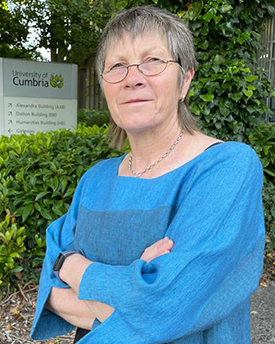 |
Professor Amanda Taylor-BeswickAmanda M. L. Taylor-Beswick is a Professor of Digital and Social Sciences at the University of Cumbria. Her work surfaces and explores the ethical, relational, and methodological implications of digitalisation and digitisation across social work, education, health, and qualitative research. She is widely recognised for advancing critical discourse on digital professionalism within these disciplines, as well as for promoting the responsible integration of emerging technologies into both research and practice. Beyond her academic work, Amanda enjoys spending time with her two rescue hounds, Brisa, a Spanish Galga, and Luca, an Irish Greyhound, as well as time with her two granddaughters (and a little grandson on the way), who live in Northern Ireland. Her commitment to this work is driven by a determination to translate policy into meaningful, real-time changes in practice, alongside this is a deep appreciation for collaborative teams who can bring work such as this to life. |
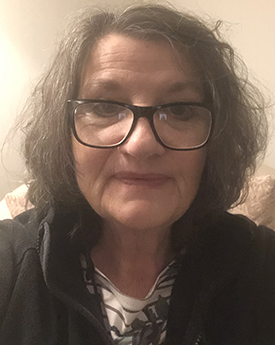 |
Alison (Ali) BryantAlison is a lived experience researcher using my personal knowledge of multiple longterm conditions, mental health presentations and ACEs. Shaping and supporting research projects to drive better outcomes informed by PPIE team members is vital to have the best research outcomes and I am excited to be a team member in this project which promises so much. |
 |
India GarrettIndia is a part of our Public and Community Advisory Group (PAG) for this project. Her personal aim is to spread awareness of lower carbon and alternative care pathways, and the various ways that the public can contribute to reducing carbon emissions through their everyday choices and actions.
She was first drawn to this particular project due to her experience acting as a secondary carer for an elderly relative who she feels could have massively benefitted from access to a virtual ward as an alternate care pathway and also by her years long interest in the fight against climate change.
One way she uses her everyday choices to combat climate change is by choosing to use public transport as much as possible whenever she needs to travel.
|
Dr Steven DoddSteve is a Senior Research Associate at Lancaster University with experience in evidence synthesis, qualitative research, and working with communities and health and care professionals. His research interests include health inequalities, public involvement, and how public services can respond to the challenges posed by climate change. On this project, Steve is contributing to Work Packages 1 and 3. In Work Package 1, he will work with Andrew Clegg to review evidence on virtual ward care pathways, develop evidence-informed model pathways, and work with practitioners to check that these reflect how care is delivered in practice. In Work Package 3, he will work with Amanda Taylor-Beswick to review existing measures of digital capability and carbon awareness. They will combine this evidence with findings from a staff survey and focus groups to develop a skills needs assessment toolkit and training guidance for staff involved in delivering, managing and commissioning virtual wards. Outside work, Steve enjoys swimming, Pilates, gardening, cooking and spending time with his family. |
