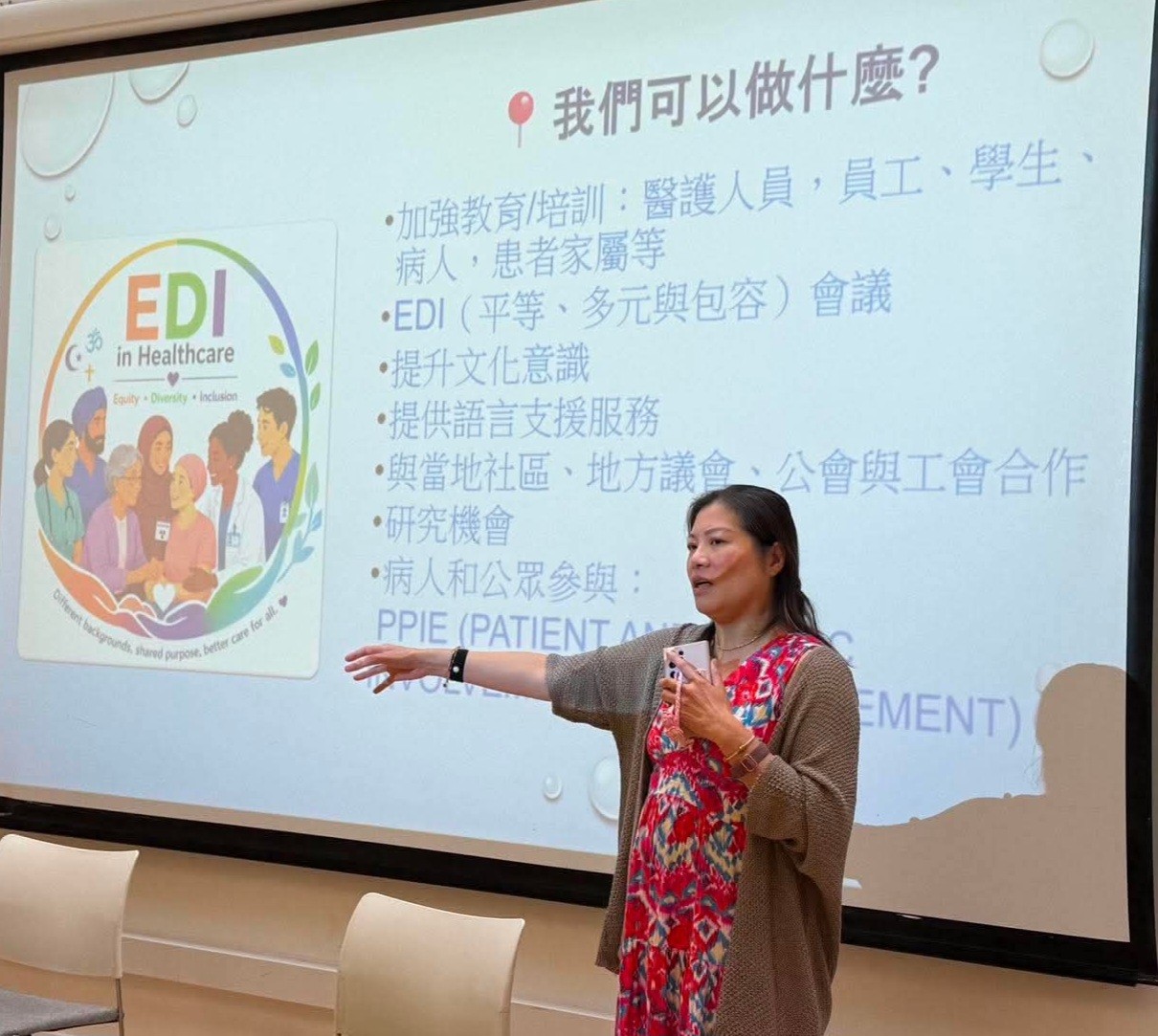
In this post, therapeutic radiographer Rose Ting reflects on how being involved with the GRACE project has impacted her practice.
I am Rose, a therapeutic radiographer with over two decades of clinical experience in radiotherapy. Throughout my career, I have been passionate about radiotherapy, delivering excellent patient care, and improving the patient experience. I have always believed that a positive patient experience can help patients better understand their diagnosis and treatment, alleviate anxiety and fear, support their psychological wellbeing and side-effect management, and help them feel more informed and empowered to engage with their treatment.
Before joining the GRACE Project PPIE Panel, my perception of Patient and Public Involvement and Engagement (PPIE) was largely centred on working together with patients. I saw it mainly as an opportunity to listen to patients and learn from their experiences, improve patient information and education, and raise awareness and understanding of radiotherapy.
Being part of the GRACE PPIE Panel has shown me that it goes much further than that. PPIE creates a genuine dialogue and learning opportunity for everyone involved. It provides a valuable space to reflect, respond, and review not only what has been provided for patients, but also how patients experience the healthcare system and how professional practice may appear from their perspective.
The discussions have given me the opportunity to hear different lived experiences and, importantly, to reflect on my own practice. They have made me think about aspects of care that can easily become routine in a clinical environment.
In radiotherapy, each appointment is typically only 10 to 15 minutes long. During that time, the focus is on delivering safe and accurate treatment, positioning the patient, preparing the treatment, monitoring side effects, and assessing the patient’s overall wellbeing. With so much to cover in a short period, it is easy for conversations to focus primarily on the treatment itself.
One thing I have reflected on through PPIE is how easily assumptions can become embedded in practice without us realising it. A patient may have attended a clinic appointment, signed a consent form, received written information, and arrived for their first treatment on time and seemingly well prepared. It is easy to assume that they understand what is going to happen. However, they may still be anxious, uncertain about something they were told, or have simply forgotten information that was discussed at an earlier appointment.
Attendance does not necessarily mean understanding, and consent does not mean that information only needs to be discussed once.
Listening to lived experiences through PPIE has helped me see the cancer pathway differently. Rather than viewing radiotherapy as a series of appointments, I increasingly see our role as walking alongside patients for part of their journey, with opportunities to check in and support them at key points throughout their treatment.
At the first treatment appointment, for example, I can encourage patients to revisit the information they received during the clinic and consent process. The first-day conversation does not have to focus solely on positioning and treatment preparation. It is also an opportunity to explore what the patient understands, whether they have any concerns, and what support they may need.
I have also become more aware of how communication is experienced during daily treatment. Talking about bladder filling, bowel preparation, passing wind, or treatment side effects is part of the clinical routine. However, these subjects may still feel highly personal, intimate, or embarrassing for patients.
The environment matters too. Speaking through an intercom may be appropriate for reassurance or simple instructions, but discussing someone’s bladder or bowel status may require greater privacy. This has made me more conscious not only of what I say, but also where and how I say it.
Another useful point for checking in is around the middle of the treatment course, particularly when side effects begin to develop. This provides an opportunity to revisit and reinforce information that was discussed during the consent process, assess how the patient is managing, and remind them about the support available, including review appointments.
At the end of treatment, it is equally important to explain what may happen afterwards. Some side effects may continue or temporarily worsen, and patients may also experience late effects they need to be aware of. Patients should know where they can seek advice and support after leaving the radiotherapy pathway.
This does not necessarily require lengthy additional appointments. Sometimes, it is simply about changing the quality and intention of conversations that are already taking place.
PPIE has also made me think more about the wider circumstances of the person coming into the treatment room. Radiotherapy may be only one part of a much longer cancer journey. Before reaching us, patients may have already undergone investigations, attended numerous appointments, had difficult conversations, and received other treatments. They may also be managing other health conditions, mobility challenges, work commitments, caring responsibilities, relationship situation, financial pressures, or other everyday challenges. Their cancer experience may affect them physically, psychologically, practically, socially, and culturally. It can also significantly affect those around them, including family members, carers, and wider support networks, who may also need information and support. While our patient is at the centre of care, supporting those who care for them is equally important, as they often play a vital role in helping patients navigate treatment and recovery. The patient’s journey also continues long after their final radiotherapy fraction.
Culture, language, health literacy, and accessibility are all important aspects of patient-centred care. The way people understand illness, discuss their bodies or symptoms, involve family members, or feel about subjects such as diet, bowel and bladder function, sexuality, and modesty can vary greatly. Through PPIE, I have become more aware that providing information is not enough. Information also needs to be accessible, understandable, and culturally appropriate for the individual receiving it. This may mean adapting how I communicate information to meet individual needs, rather than assuming the same approach will work for everyone.
Perhaps one of the most valuable lessons I have taken from my PPIE experience is simply to ask rather than assume.
This also applies to how much information a patient wants, or is ready, to take in. Not everyone wants to receive a large amount of information all at once, especially when they may already be processing a diagnosis, appointments, treatment decisions, and many other concerns.
This experience has made me reconsider the idea that good communication simply means giving patients as much information as possible and expecting them to remember it. Instead, I am learning the value of checking in at different points, revisiting information when it becomes relevant, and asking what the patient needs at that particular moment.
Information provided during consent may mean something very different when the patient attends their first treatment appointment, when side effects begin, or when they reach the end of treatment.
For me, patient-centred care is not about overwhelming someone with information at a single point in their journey, but about ensuring opportunities throughout treatment to ask questions, revisit information, and receive support when it is most useful.
I have always considered myself patient-focused, but being part of the GRACE PPIE Panel has encouraged me to view patient-centred care more broadly. Previously, I tended to think primarily about what we could do for patients to improve their experience. Now, I think more about how we can work with patients, continually checking understanding, listening to what matters most to them, and adapting our practice accordingly.
It has reminded me that listening to patients is not only about improving services or patient information. Their lived experiences can also help me reflect on the small things I do every day: how I communicate, what assumptions I make, when I check understanding, and whether I have truly given someone the opportunity to tell me what matters to them.
For me, this is an important part of my ongoing development as a therapeutic radiographer. I may bring professional knowledge and experience in radiotherapy, but each patient brings their own expertise in what it is like to live through diagnosis and treatment. Both perspectives are essential for delivering care that is genuinely centred on the person in front of me.
PPIE gives me the opportunity not only to hear the patient voice, but also to allow that voice to make me pause, reflect, and review my own practice.
Perhaps truly patient-centred care is not about assuming that I have prepared a patient for every stage of their journey. It is about continuing to support them throughout that journey, checking in at key moments, and remembering to ask:
Do you understand? How are you managing? What matters to you now? And how can I help?
Leave a Reply