Project Team: Serena Pollastri
Year: 2023
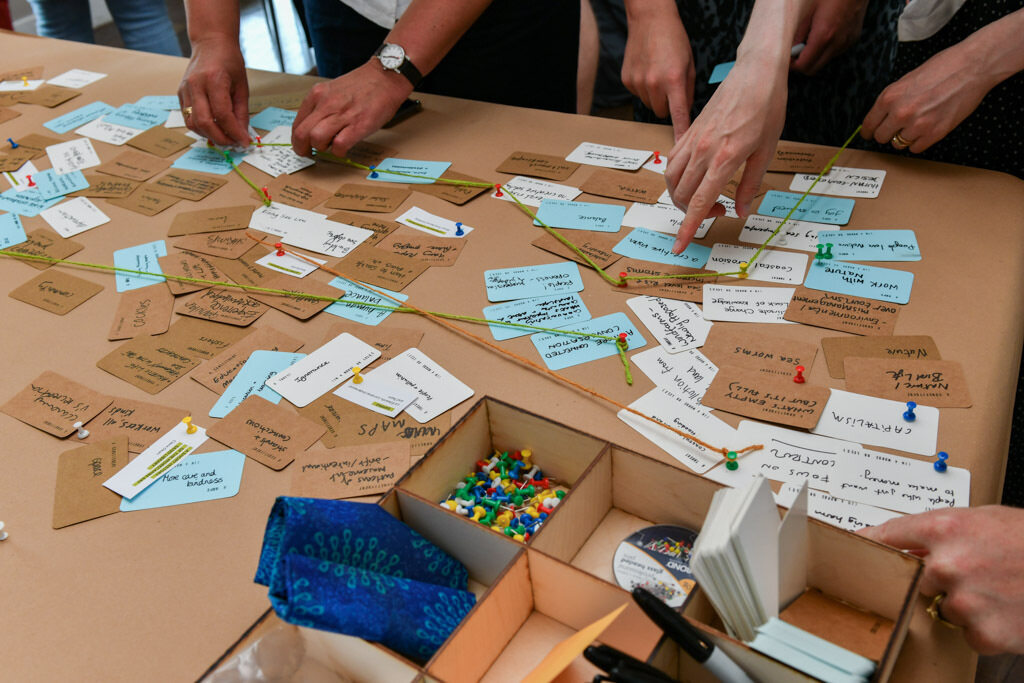
Aqueous Futures an engagement project that brings together policy makers, non-academic environmental agencies, and communities to demonstrate how embodied, experimental, design-led approaches to building knowledge about place can be adopted in processes of planning, implementing, and monitoring interventions for climate adaptation in coastal areas.
Predictive models and data monitoring practices all show the severe impacts that flooding, erosion, and extreme weather events will have on coastal settlements in the UK and around the world. Conventional engineering approaches of building hard infrastructures (like sea walls or flood barriers) alone are increasingly becoming unsustainable long-term strategies, as they are unable to adapt to the uncertainties brought about by climate change without continuous and costly interventions. Thus, a significant paradigm shift has occurred towards a more nuanced approach centred on engaging with interactions between social, economic, and natural resources.
Local councils in coastal areas in the UK are gradually starting to collaborate with public bodies, non-governmental organisations, and communities to support interventions for climate adaptation through the use of natural resources such as wetlands, willows, saltmarshes, sand dunes and sedimentation to prevent flooding and erosion. However, this approach to climate adaptation requires novel ways of embracing the complex, ambiguous and unpredictable dynamics of interactions between non-human entities (e.g. sands, flora, local fauna etc.) and human-made infrastructures which are at the fundamental core of coastal environments.
What role can art and design play?
In recent years, design research has engaged in experimenting with ways of knowing and engaging with more-than-human dynamics and their ambiguities through critical cartographies, speculative interventions, and participatory actions. Coastal communities, particularly those in intertidal and estuarine areas, have also historically negotiated their complex relationship with water through experiential and situated knowledge which enables them to understand and adapt to often unpredictable weather patterns.
This project seeks to demonstrate how these modes of knowledge production, which are alternative to the computational views of the environment customarily adopted in engineering processes, can be applied to the development of climate positive, nature-based interventions for coastal adaptation.
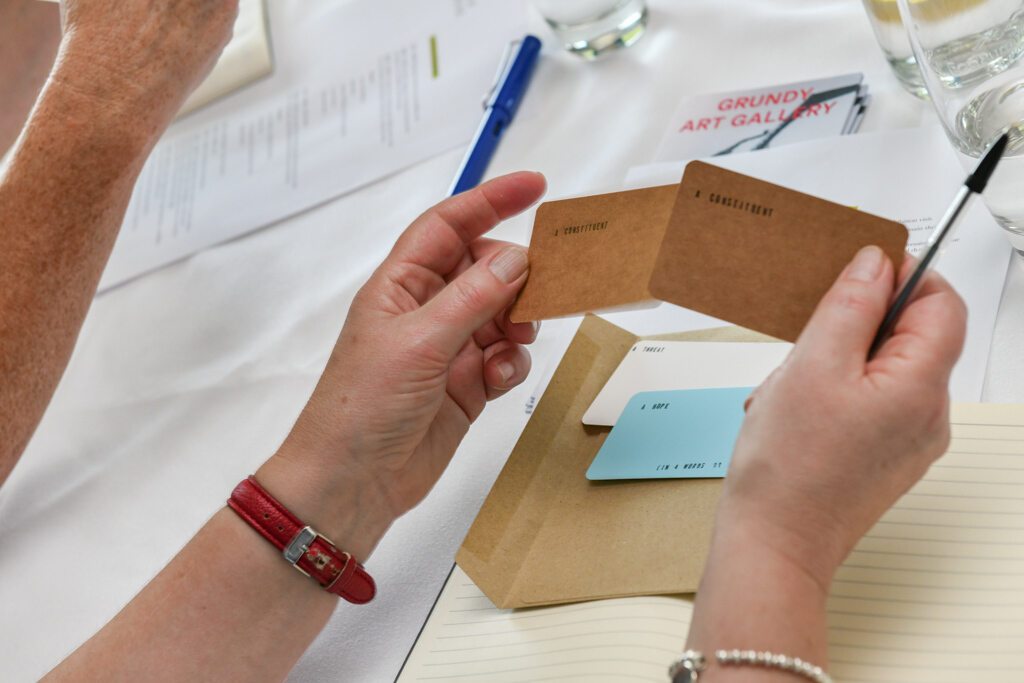
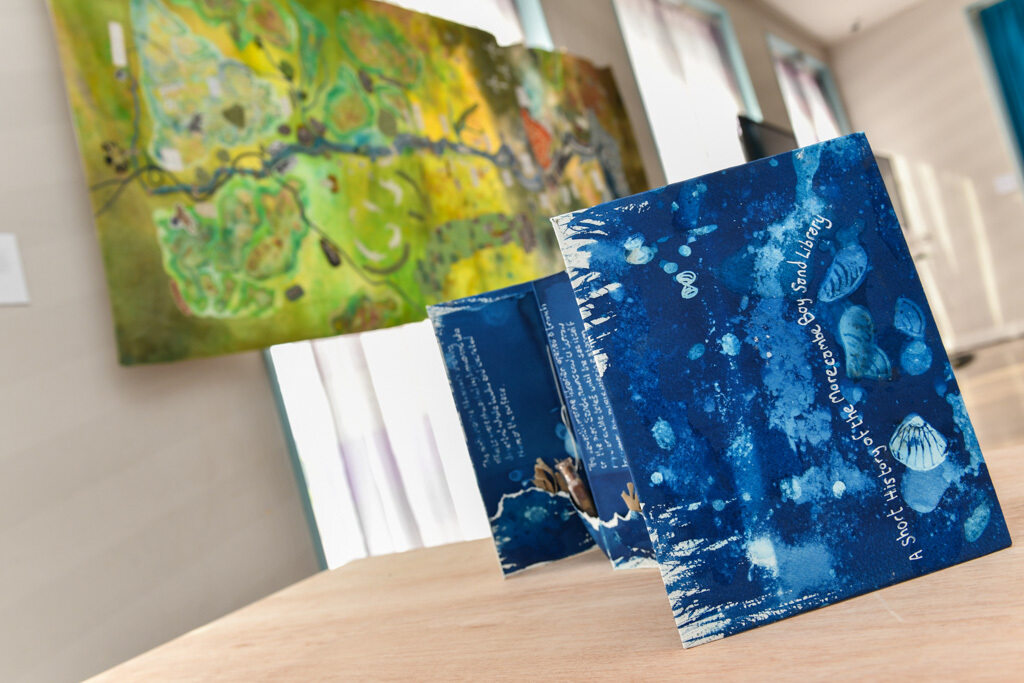
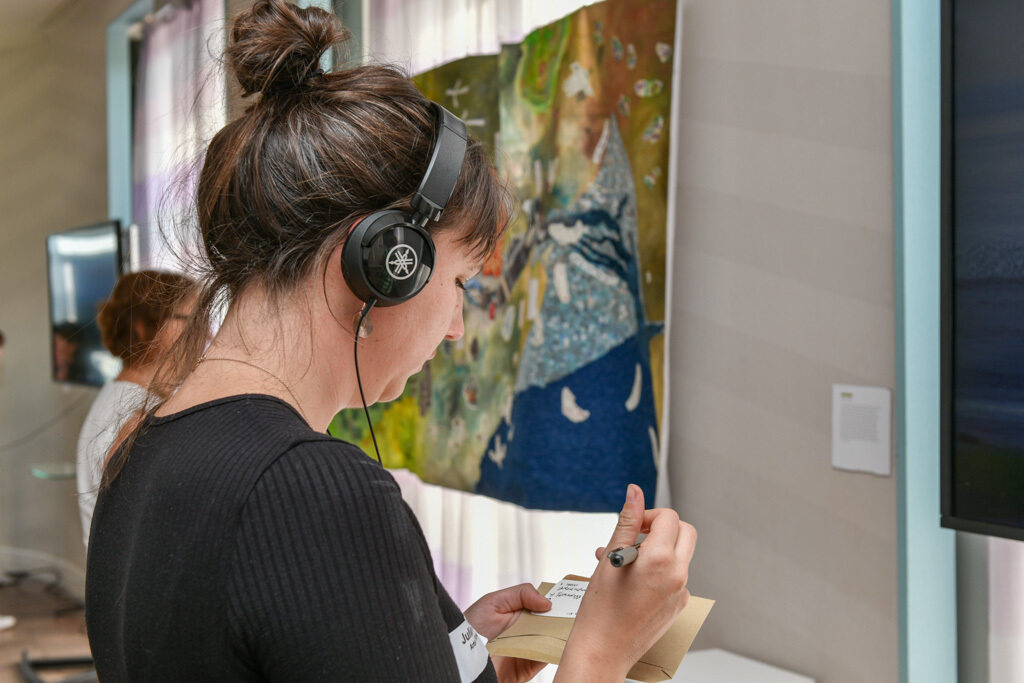
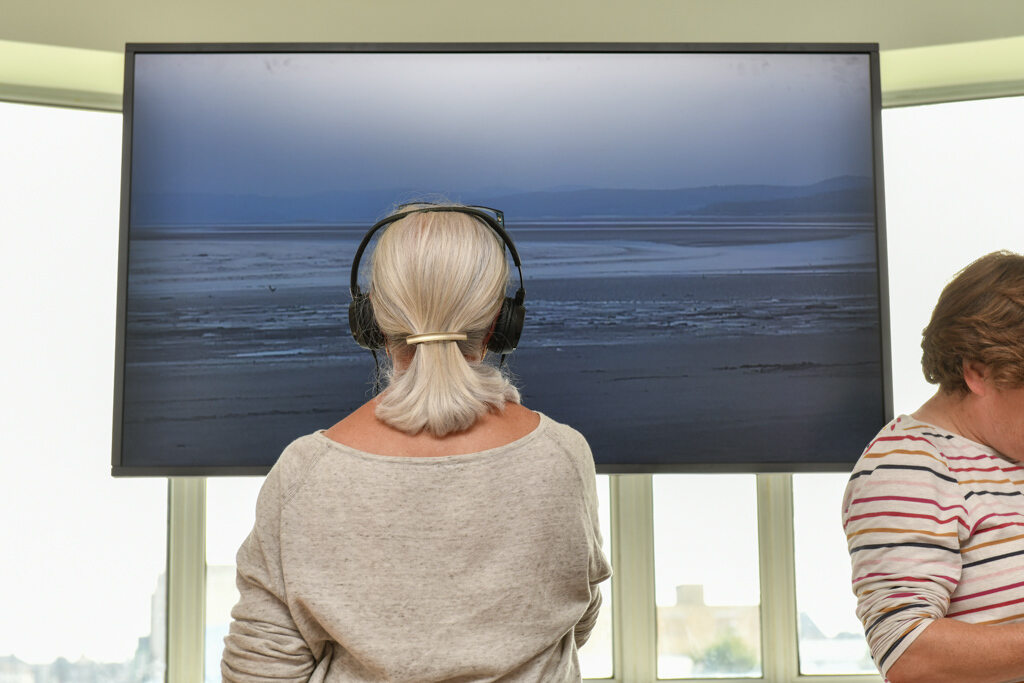
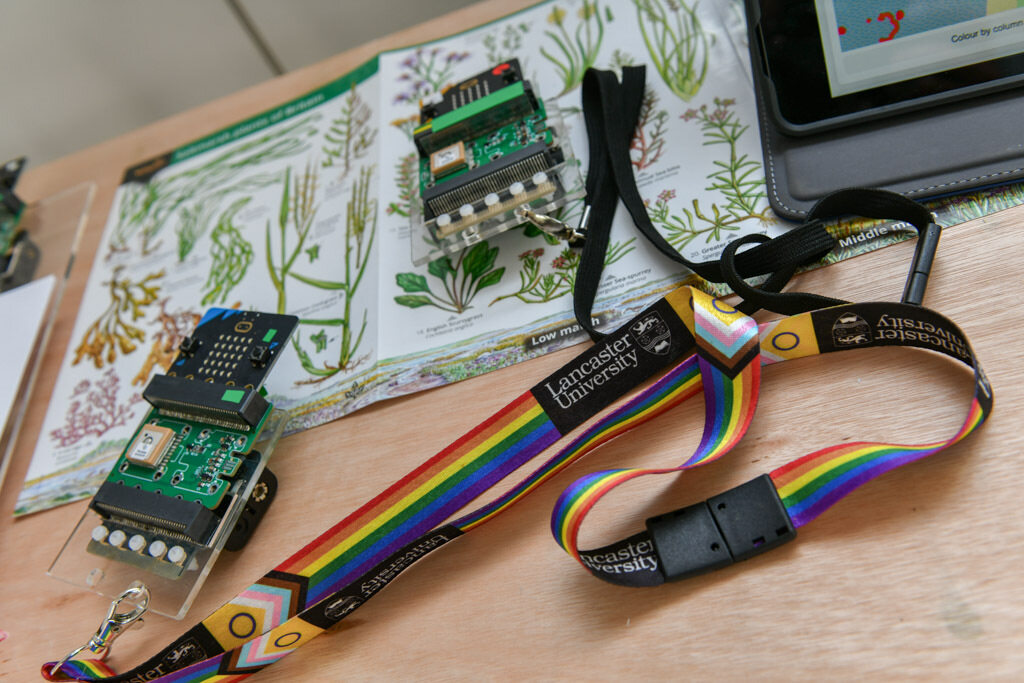
This project culminated in a symposium organised as part of the Morecambe Milieux conference and a final exhibition. The Aqueous Futures exhibition explored ways in which art, design, and documentary practices can support knowledge meaning-making, and engagement in coastal and water environments. The exhibition was on display at the Sun Terrace (Midland Hotel) and included work by
Art Gene; Sarah Hymas; Amy Dickson and Jamie Jenkinson; Stan Cafe (with Lancaster Arts and Sewing Cafe Lancaster); Open Forest Collective; Julia Parks; Debbie Yare; Matterlurgy; Aurora Fredriksen.
More information about the project and the Morecambe Bay Conference at this link: https://wp.lancs.ac.uk/milieu/
Aqueous Futures is a Design Accelerator project funded by AHRC and the Future Observatory at the Design Museum.
Design Accelerators are small scale reactive projects that are designed to support engagement between design R&I projects and diverse private, public and third sector organisations, local communities, and the general public.