We host an annual lecture in cognitive linguistics inviting world renowned scholars to Lancaster whose research addresses different areas of cognitive linguistics.
2025-26: Dr Daniel Alcaraz Carrion

Daniel is a tenure-track professor at the Universidad de Murcia in Spain where he is a member of the Daedalus lab. He obtained his PhD in cognitive linguistics from Lancaster University in 2018. His research addresses the multimodal nature of human communication and has investigated specifically the use of co-speech gestures when we talk about time and number. His most recent publications include “Numbers skyrocket in English but increase in Spanish: metaphoric conceptualization and manner expression in translations” (Language and Cognition) and “Adding and subtracting by hand: Metaphorical representations of arithmetic in spontaneous co-speech gestures” (Acta Psychologica, 2022). He is the lead researcher on a project on numerical communication (NUMBES) and he is a member of the Multidata Erasmus + project for the creation of tools to analyse multimodal data.
2023-24: Professor Peter Stockwell

Peter is Professor of Literary Linguistics at the University of Nottingham. His research has pioneered the field of Cognitive Poetics, an approach to stylistic analysis based in cognitive linguistics. His seminal book Cognitive Poetics: An Introduction is now in a second, updated edition (Routledge, 2020). He is also author of Texture: A Cognitive Aesthetics of Reading (EUP, 2009) and The Language of Surrealism (Palgrave, 2017). He has worked extensively on different textual phenomena including iconicity, mind-modelling, immersion, and free-indirect discourse.
2022-23: Professor Dagmar Divjak
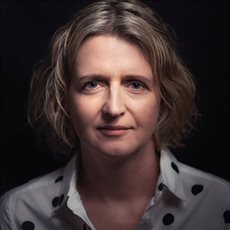
Dagmar is Professorial Research Fellow in Cognitive Linguistics and Language Cognition at the University of Birmingham. Her main research investigates the way our cognitive capacities give rise to the patterns that we see in language and how language learners might use these patterns to build up knowledge of their language. Professor Divjak works at the cutting edge of quantitative corpus-based and experimental methods in cognitive linguistics. She is the lead researcher on a recent £1m Leverhulme project, Out of our Minds, which, by using computational modelling techniques that mimic human learning processes, promises to develop new, cognitively plausible ways of describing speakers’ linguistic knowledge.