GPs are the doctors that people see most often, but there’s lots more to being a GP than most people realise.
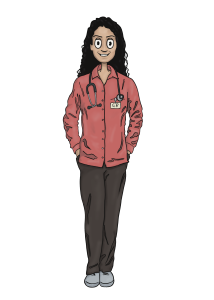
Brooke has wanted to be a GP since medical school, but it means she has to make lots of difficult decisions about her career.
Watch the video below to find out more about the choices GPs need to make.
Video Transcript
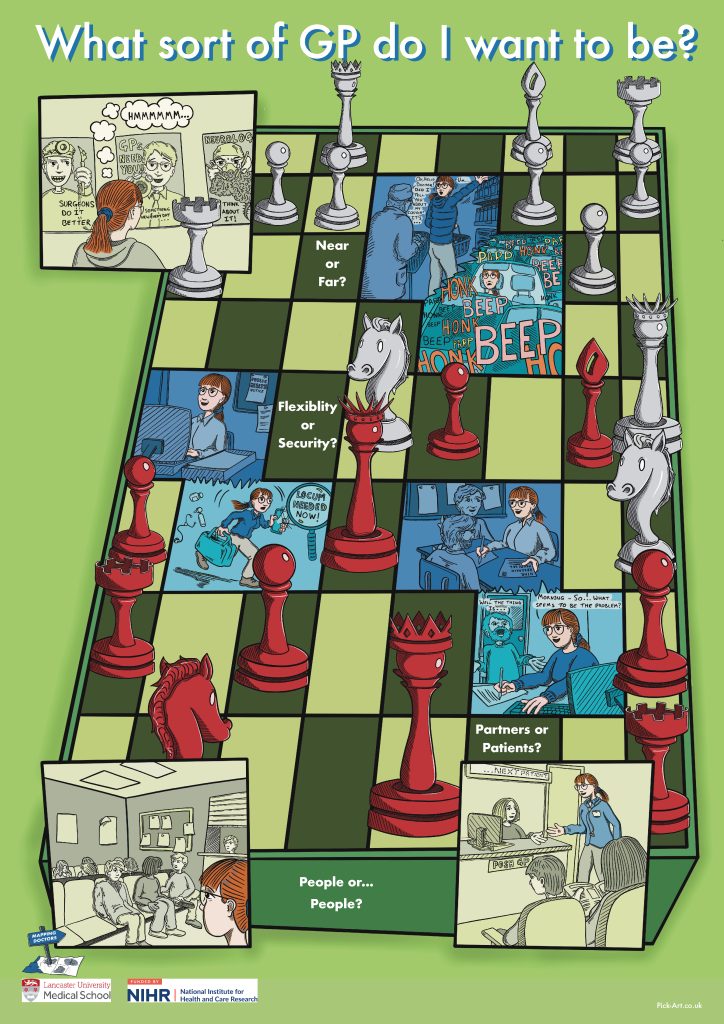
What sort of GP do I want to be?
Cartographic narratives are a form of telling stories about people and places. We have used them in our research project, Mapping Underdoctored Areas to share some of the experiences that doctors described to us about their medical training, and the choices they felt they had to make about their career paths. We are interested in the relationships between places, medical training pathways, and areas that struggle to recruit and retain a medical workforce. With these narratives, we want to encourage discussion about how underdoctoring is affected by events in doctors’ lives.
Here, Tony, the artist we have been working with, is drawing some of the challenges faced by general practitioners in particular. Our character, let’s call her Brooke, has known that she wanted to be a GP since medical school, but it turns out that there is a lot that she didn’t know about being a GP until she was faced with the choices. Some of the doctors we worked with in our study were committed to being a GP for the community, while others liked to have more separation between their personal and working lives. This might mean a long commute to work on a daily basis. But the alternative might be for you to see patients in the supermarket when you’re doing your weekly shop or at the school gates. The separation between work and home life is important, and doctors are not allowed to provide treatment for their friends – which is difficult if you all live in the same village.
There are also lots of different roles GPs can take. Should Brooke choose the responsibility of being a GP partner, which gives a level of stability in working practices, or the flexibility of being a locum GP and filling in when she is needed? Being a GP partner means being good at administration, finances and people management as well as patient care – does Brooke want to take all of that on when she could be seeing patients in much needed GP appointments.
Brooke also needs to choose where she wants to work. GP practices in deprived communities often really need doctors to join their practice to care for patients, but it can be a challenging environment to work in. Would she be happier at a GP practice in a more affluent area? The clinical work might be easier, as people who live in poverty often experience more long term health conditions and poorer heath outcomes, but is working in an affluent area less satisfying? Brooke thinks that medicine is most fulfilling as a career when you are helping people who really need medical care. All these choices need to be made – not just for Brooke, but for all the doctors who go on to be GPs. We heard from our patient involvement group that GPs are the doctors they see most, and it’s important that they have good access to appointments – supporting doctors like Brooke is vital to ensuring that patients will have the good care they need.