
Can we keep flying? The sustainability of the aviation industry
by Alex Cooper
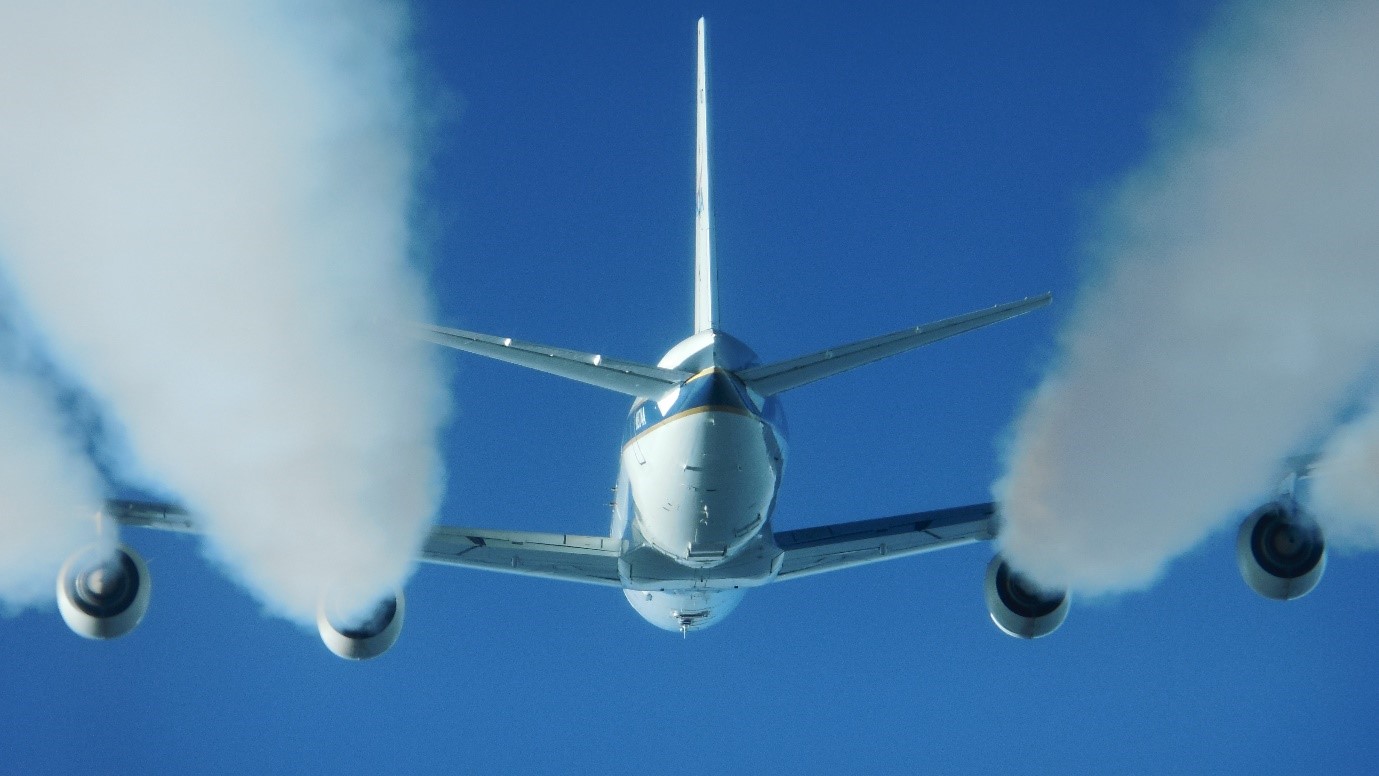
Figure 1: Exhaust contrails from a NASA jet testing biofuel. Image attribution: NASA / Eddie Winstead, Public domain, via Wikimedia Commons
Most people are aware that air travel is a major contributor to climate change [1], but would you be willing to limit the number of flights you take? Studies suggest you probably wouldn’t [2]. If passengers aren’t willing to limit the number of flights they take, this means it’s up to the self-regulated airlines to take steps towards carbon-neutral air travel, but are their measures effective? Is the future of commercial flight sustainable? If not, can we keep flying at all?
Of course, we can and will keep flying, commercial flight is a vital aspect of modern society [3]. This isn’t to say it’s not important that airlines strive to reduce their carbon footprint as much as possible. This blog is written to help convey the findings of a 2023 study into carbon reduction in the aviation industry by Filho et al. [4] and explain its wider relevance in terms of global greenhouse gas (GHG) emissions. This study first used bibliometric analysis of 772 articles to explore the implications of climate change, particularly on the tourism and aviation industry. Bibliometric analysis is the statistical study of trends in academic publications [5], useful for finding correlations between different words and terms. The analysis found two major focus areas: emissions and economic issues; and found strong links between tourism and ecological footprint. Filho et al. cited that tourism-related air and land travel is responsible for around 10% of annual CO2 (a major GHG) emissions [6], which these trends lined up with.
The study also carried out a multiple-case analysis, which is simply the comparison of multiple case studies. The carbon reduction goals and methods of 20 of the world’s largest airlines were analysed. The first discovery in this analysis was that more than half of the airlines had pledged to reduce CO2 emissions by 50% by 2050. The Filho et al. multiple-case analysis also revealed that Sustainable Aviation Fuels (SAF) such as biofuel were being widely adopted as a method of reaching these goals. Figure 1 shows a NASA jet testing SAF. The study also found that most airports using SAF were in Europe and North America, showing the divide between the more developed Western nations and their less developed counterparts.
The Filho et al. paper concluded that carbon-intensive tourism pre-COVID-19 pandemic was unsustainable in the long term, largely due to airlines being self-regulatory, and that every year the aviation industry’s GHG emissions increased. It also concluded that most attempted strategies to lower emissions had been unsuccessful so far, linking to a paper by Lenzen et al. [7].
To conclude, the Filho et al. paper’s findings suggest that unless new, more effective methods of carbon reduction are taken under wing by airlines, the 50% reduction goal is unlikely to be reached, and the aviation industry will continue to grow more unsustainable year on year, also potentially growing its share of global emissions.
References:
[1]: Bonini S, Oppenheim J (2008) Cultivating the green consumer. Soc Innov Rev 6(4):56–61
[2]: Xu S, Stanis SW, Zhang H, Groshong L, Morgan M (2021) Impact of travel distance and experience use history on visitors’ climate friendly behavior and support for climate friendly management action. J Sustain Tour.
[3]: Aerocorner (no date) How Airplanes Changed The World on Every Level. https://aerocorner.com/blog/how-airplanes-change-world/ [07/10/23]
[4]: Leal Filho, W., Ng, A.W., Sharifi, A. et al. (2023) Global tourism, climate change and energy sustainability: assessing carbon reduction mitigating measures from the aviation industry. Sustain Sci 18, 983–996.
[5]: Ninkov, A., Frank, J.R. & Maggio, L.A. (2022) Bibliometrics: Methods for studying academic publishing. Perspect Med Educ 11, 173–176.
[6]: Bella G (2018) Estimating the tourism induced environmental Kuznets Curve in France. J Sustain Tour 26(12):2043–2052
[7]: Lenzen M, Sun Y-Y, Faturay F, Ting Y-P, Geschke A, Malik A (2018) The carbon footprint of global tourism. Nat Clim Chang 8(6):522.