Your Degree Is Just the Beginning: Pathways to Explore with Humanities, Arts & Social Sciences
When you study in the Faculty of Humanities, Arts and Social Sciences, you gain much more than subject knowledge. You develop critical thinking, creativity, communication skills, and the ability to understand people and societies — all qualities that employers value across sectors.
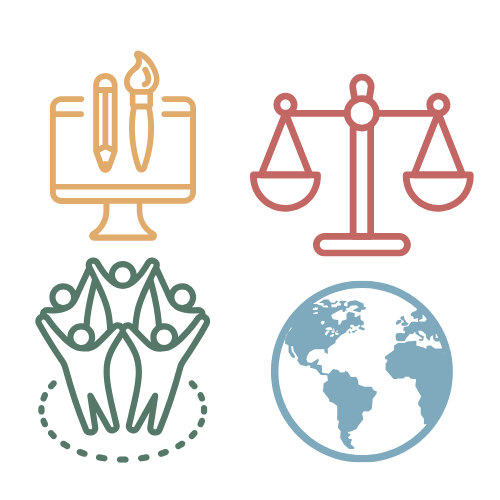
That’s why we don’t believe your degree limits you to a single type of career. Instead, we support you to explore roles that match your values, strengths and ambitions. Our students go on to thrive in a variety of areas and our Employability Team have identified four key themes which encompass these broad opportunities for you.
Law
Law is a well-established subject within our Faculty, and many of our Law students naturally go on to careers in the legal profession. But it’s important to emphasise that a career in law isn’t limited only to those studying Law as their degree subject.
Graduates from across the humanities, arts and social sciences bring valuable skills — such as research, critical thinking, problem-solving and communication — that are highly relevant to legal work. Many enter the field through conversion courses, graduate training programmes, or roles in policy, regulation and advocacy that connect closely with the legal sector.
Whether you’ve studied Law, History, Philosophy, Politics, Sociology, English, or another subject, opportunities in the legal world may be open to you.

Society & Social Justice
If you’re passionate about fairness, equity and creating change, careers with the Society & Social Justice theme offer you a wide range of opportunities. Many of our graduates are drawn to work in charities, NGOs or social enterprises, where they can directly support communities and address pressing social issues. Others take their interest in justice into policy and advocacy roles, helping to influence decisions at local, national or international levels.
Education also sits firmly within this pathway, as it is one of the most powerful tools for promoting social justice. Many of our graduates build rewarding careers in teaching, widening participation, or shaping education policy. Others work in training, outreach or community education, where they open doors and expand opportunities for people from all walks of life.
Whether through grassroots projects, public policy, or the classroom, careers in ‘Society and Social Justice’ are all about using your skills to make a meaningful difference.

Global Affairs
Global Affairs is about engaging with the big issues that cross borders and shape our world. For some students, this means a career in diplomacy, policy, or international development- working with governments, think tanks or global organisations. But we see that this theme goes far beyond traditional international relations.
Graduates interested in this area might explore roles connected to climate change, human rights, global health, migration, or conflict resolution. Increasingly, new challenges such as artificial intelligence, cyber security and the digital economy are also becoming central to global debates. Humanities, Arts and Social Science graduates bring vital skills to these conversations- critical thinking, ethical reasoning, cultural awareness, and the ability to analyse complex problems from multiple perspectives.
Whether you are fascinated by the future of technology, international law, humanitarian aid or global governance, careers in Global Affairs will allow you to contribute to solutions for the issues that matter on a global scale.

Creative Industries
Careers in the Creative Industries are all about imagination, innovation and communication. It’s a diverse sector that includes publishing, journalism, design, film, television, theatre, music, advertising, gaming and digital media. Many of our graduates build careers where storytelling, problem-solving and cultural insight are at the heart of what they do.
Opportunities can be found both in front of and behind the scenes: from writing, editing and producing, to marketing, project management and digital strategy. With the rise of creative technologies, graduates are also increasingly involved in areas like content creation, user experience design, and immersive media.
For those with an entrepreneurial spirit, the creative industries also offer space to freelance or start your own venture, drawing on your unique ideas and voice. Whether you dream of shaping cultural conversations, designing new experiences, or managing creative projects, this route shows how skills developed in the humanities, arts and social sciences can thrive in fast-moving, dynamic industries.

Your career doesn’t need to follow a straight line from your degree subject. The skills you’re building now can open doors across any career you may think of.
We’re here to help you explore these possibilities and support you in finding the role that’s right for you.
- Explore our resources on Moodle
- Read more stories here on the blog
- Or book a 1:1 appointment with the Employability Team through Careers Connect