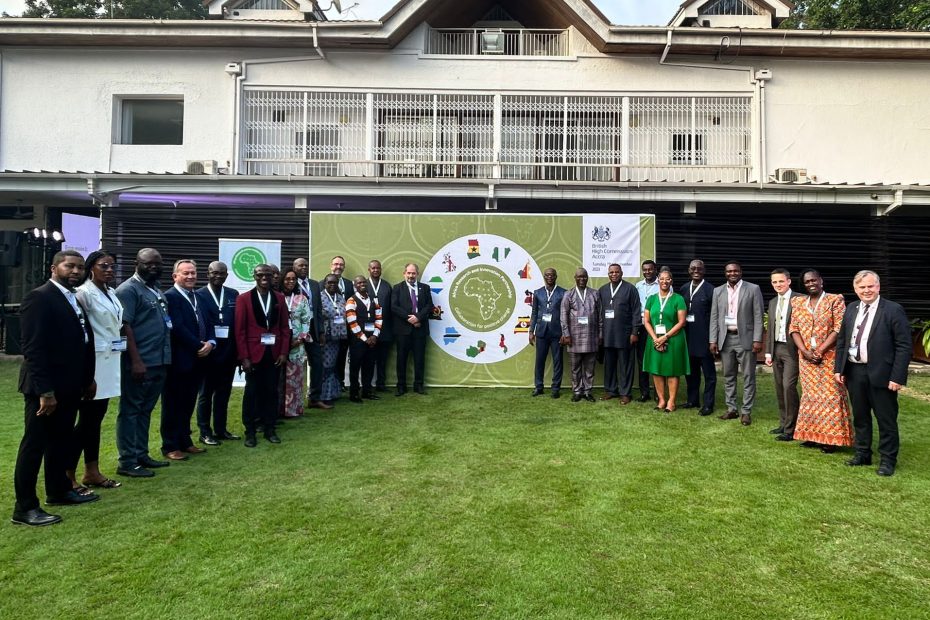
The Africa Research and Innovation Partnership (ARIP) was formally launched at the British High Commissioner’s residence in Accra, Ghana on September 19. More than 30 collaborators from universities, research councils and government agencies in Ghana, Nigeria, Kenya, Sierra Leone and the UK attended the event, which also celebrated the 10th anniversary of Lancaster University working in Ghana.
The launch was followed by a networking event which included representatives from other Ghanaian institutions, the Science and Innovation Network of the UK Foreign, Commonwealth and Development Office (FCDO) and others from across the whole of Africa and UKRI.
Over the last decade, the university said it had learnt a lot from its African partners, and believes that together, transformational change can be brought about through co-design, co-development and co-delivery.
Professor Lawrence Ezemonye, Vice Chancellor of Igbinedion University, Nigeria, said: “The timely launch of Africa Research and Innovation Partnership (ARIP) demonstrates Lancaster University’s indomitable collaborative instincts. ARIP is built on an established pedigree and leverages on legacy footprint.
“This explains why Igbinedion University places a high premium on ARIP as a collaborative ornament for transformative research.”
Professor Simon Guy, Pro-Vice-Chancellor Global at Lancaster University added: “The launch of the Africa Research and Innovation Partnership demonstrates Lancaster University’s commitment to delivering the highest quality research and capacity building through creating a strong community of trusted partners.”
ARIP will build on communication and capacity building strategies developed from the UK‐funded GCRF RECIRCULATE and ACTUATE projects, which were delivered with partners from six African countries from 2017 to 2022.
Particular areas of initial multi-disciplinary interest for ARIP will include solution-driven environment and sustainability with a particular focus on partner strengths around the circular economy, waste-energy-food nexus and resource recovery from waste, soil and water security, agriculture and food security, environmental pollution, renewable energy, and climate-related research.
Other areas of interest include urban environments, gender inequality and stimulating entrepreneurship for positive environmental and societal benefits.